

Henry Ford, arriving at the White House (image by Gemini)
Henry Ford’s black Lincoln Model L swept past the Treasury Building and through the gates of 1600 Pennsylvania Avenue gliding to a stop. America’s richest industrialist had come to the White House to beg.
Smoot-Hawley and the Cost of Ignoring Economics
Over the course of an evening with President Herbert Hoover, Ford pleaded with him to veto the Smoot-Hawley Tariff Act. He called it “economic stupidity.” J.P. Morgan’s chief executive, Thomas Lamont, said he “almost went down on his knees” to make the same case. Over 1,028 economists had signed a petition begging Hoover not to sign. Hoover privately agreed the bill was “vicious, extortionate, and obnoxious” but he signed it anyway.
What followed was the Great Depression.
Why the CUSMA Economic Impact on Canada Matters
Ninety-six years later, a new poll shows that 55% of Canadians can’t be bothered to worry about the possible end of Canada-United States-Mexico Agreement (CUSMA)—the trade architecture that keeps 86–90% of Canadian exports flowing duty-free across the border. The economists are waving their arms again. The question is whether anyone is listening?
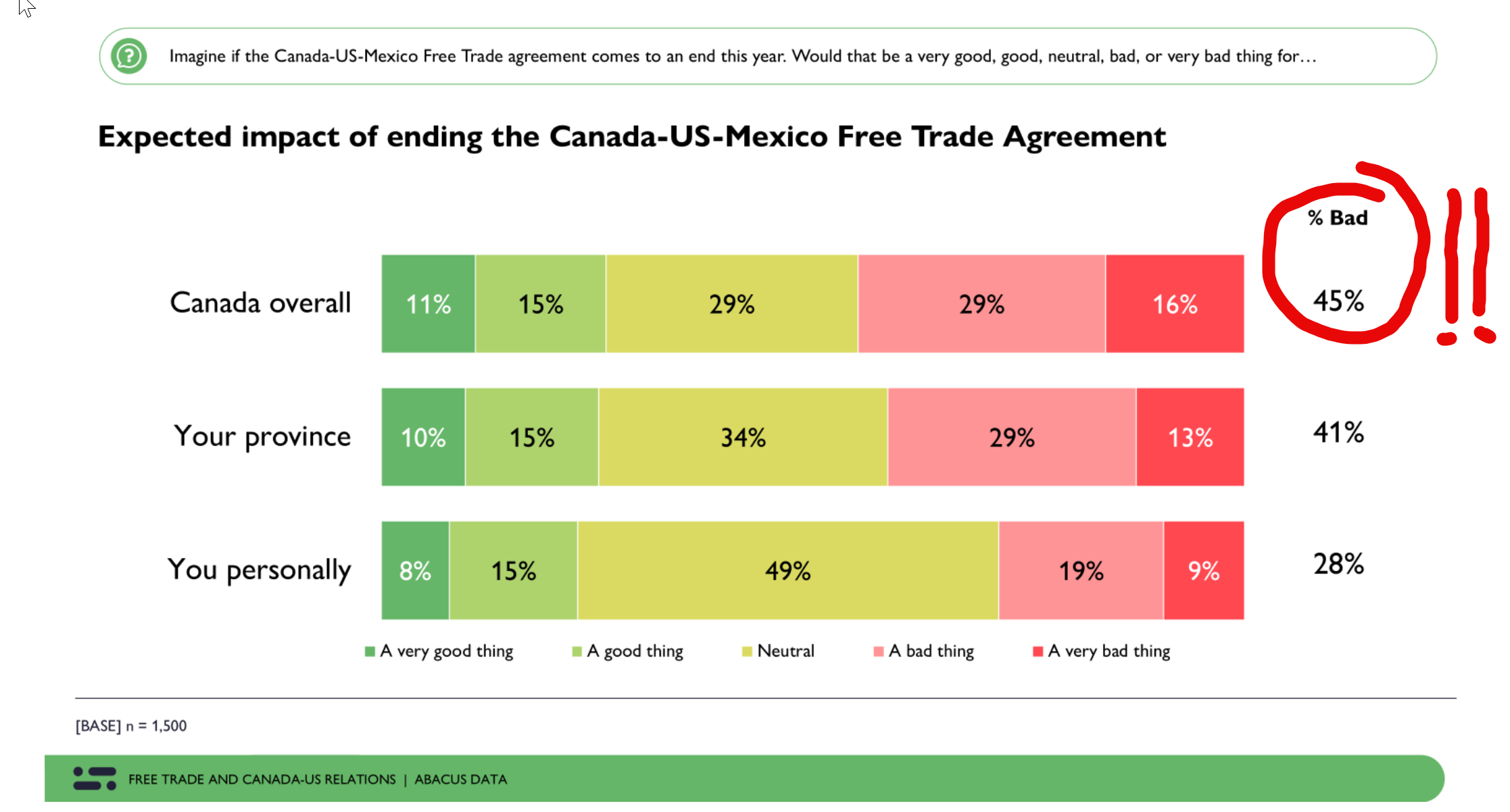
Ford’s description of Smoot-Hawley is apt in describing these poll results “economic stupidity”. As an investor, I try to maintain an optimistic outlook. Results like this make it difficult.
For the record, our observation is that economists strongly disagree with the majority of Canadians. Prime Minister Mark Carney, disagrees with the majority of Canadians. The Governor of the Bank of Canada disagrees with the majority of Canadians. Business leaders disagree with the majority of Canadians. Let’s dig in.
What Happens if CUSMA Ends
CUSMA currently shields approximately 86–90% of Canadian goods exports from U.S. tariffs. Those exports amount to roughly 19% of Canada’s entire GDP. Without the agreement, trade reverts to the World Trade Organization’s most-favoured-nation terms—under which only about 40% of Canadian exports to the U.S. enter duty-free. Canadian trucks would face a 25% tariff, footwear up to 35% and apparel up to 32%.
GDP, Jobs, and Recession Risk
The economic projections from losing CUSMA aren’t theoretical. They have been modelled (in detail) by people whose job it is to be right about these things:
- BMO Economics estimates a full CUSMA collapse would make recession “virtually assured,” with Canadian GDP declining 1–2% in year one, unemployment rising by up to 1.5 percentage points (roughly 300,000 additional Canadians out of work) and economic activity ending up approximately 5% below pre-tariff growth trends. Permanently—source.
- Desjardins Group models a recession as “likely in the first half of 2027,” with real GDP growth permanently weakened—not just temporarily disrupted—source.
- The Bank of Canada (BoC) warns that an unfavourable CUSMA outcome would cause structural damage to Canada’s productive capacity and put GDP “on a lower path”—while simultaneously constraining the BoC’s ability to use rate cuts to respond—source.
- A KPMG survey of 501 executives found that over 90% identified a detrimental CUSMA renegotiation as the single greatest threat to Canada’s economic stability, with 73% saying they cannot absorb the cost of pivoting to overseas markets—source.
Canada’s Auto Sector and Energy Exports at Risk
Canada’s auto sector—500,000 workers, $16 billion annually in GDP—exports over 90% of its vehicles to the United States. Those supply chains, where parts cross the border multiple times during production, would become economically unworkable overnight. Canada’s $87 billion in annual energy exports to the U.S. would face tariffs not seen since the Depression era.
Ask yourself this, “will housing prices recover or fall further if there are mass layoffs in Ontario’s auto sector?” I’d bet on the latter.
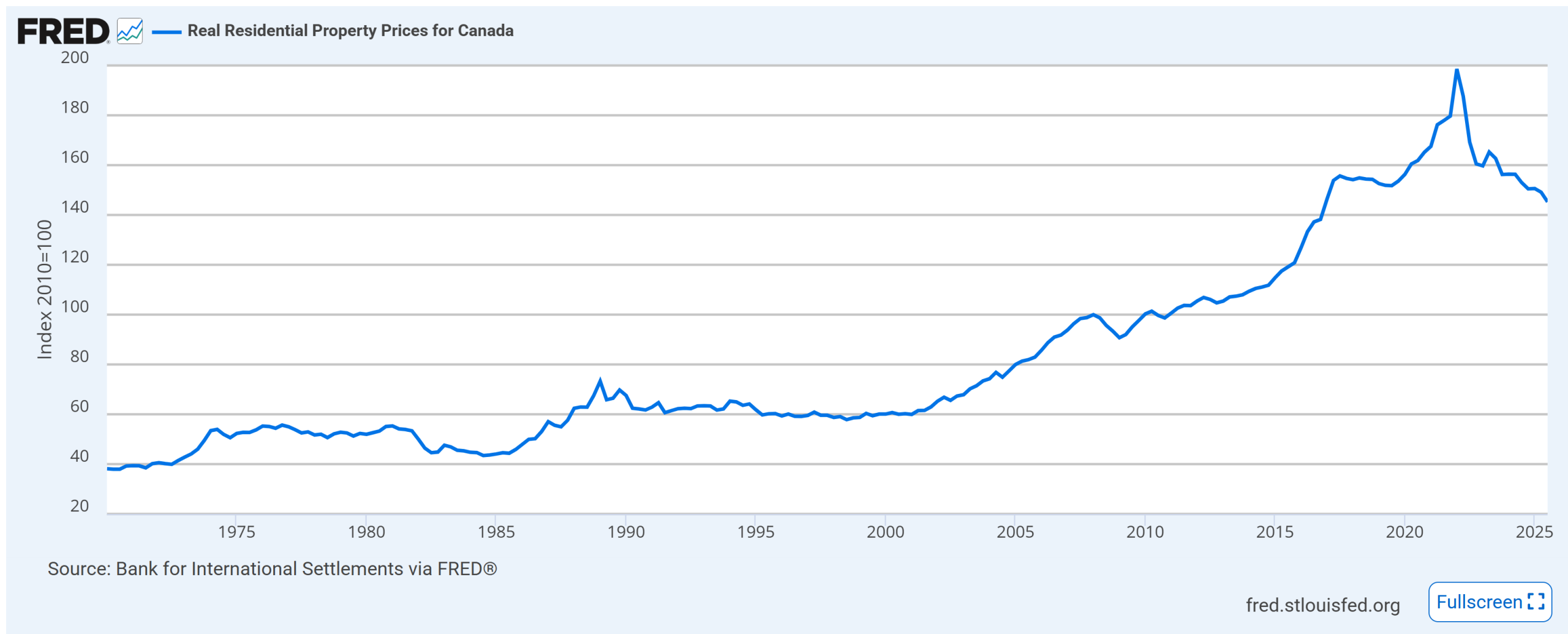
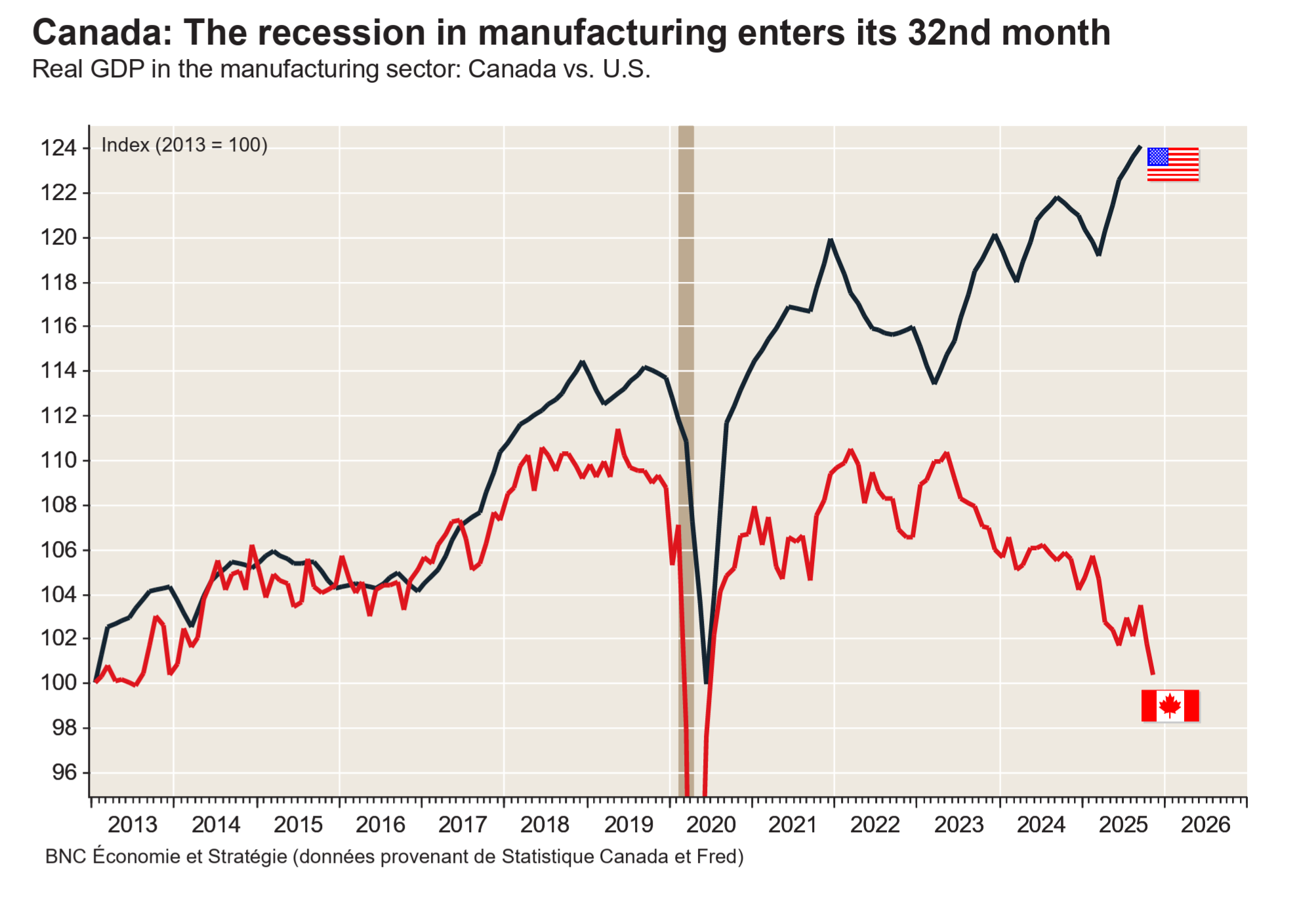
The 55% of Canadians who are unconcerned about CUSMA need to reckon with the fact that Canada has been in a manufacturing recession for 32 months already:
The Canadian Dollar and Purchasing Power
The Loonie has already dropped almost 20% compared to the Euro, further weakness against it and the U.S. dollar could follow, further reducing Canadian purchasing power:
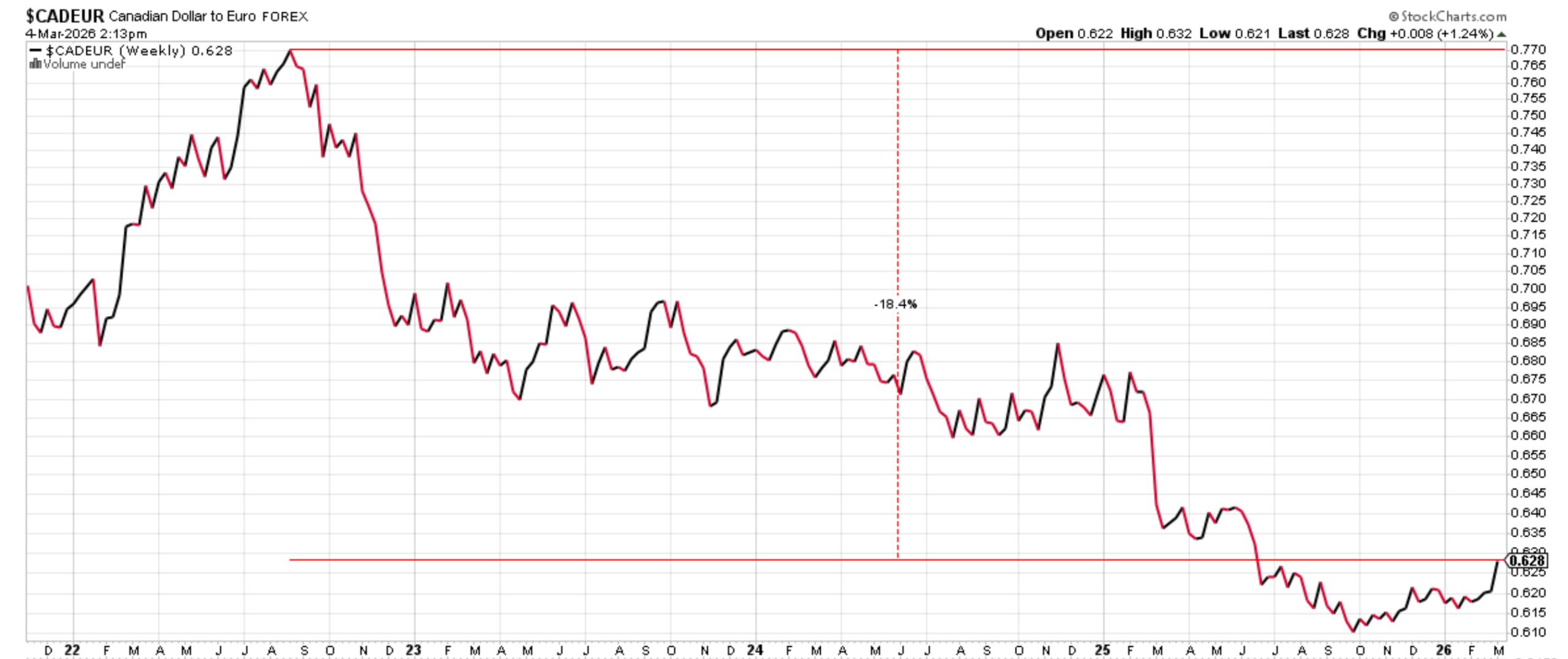
Chart courtesy of StockCharts.com as 03/03/26
What the CUSMA Economic Impact Means for Investors
In case there is any lingering doubt, let me be clear, Evans Family Wealth believes strongly that the end of CUSMA would be “a very bad thing” in the parlance of the poll. If you’re an investor, so should you. This is particularly true if you have a preference for Canadian over US investments at this given moment.
Look, I understand the frustration. Canadians are right to be indignant about the abuse that has been levelled at us and worried about the ramifications of the trade negotiations that will get underway soon. Prime Minister Carney is fond of saying that he deals with the world as it is, not as he might wish it to be. That’s a good lesson for Canadian investors.
Glen