
Dear Friends and Clients,
I hope you are all enjoying a wonderful and relaxing summer. There is a familiar rhythm to these warmer months—a time when the pace naturally slows down, families gather by the water, and we all take a moment to breathe. The financial markets often mirror this seasonal shift, occasionally drifting into quieter, low-volume stretches where patience is the greatest asset.
Our Scorecard: Portfolio Performance
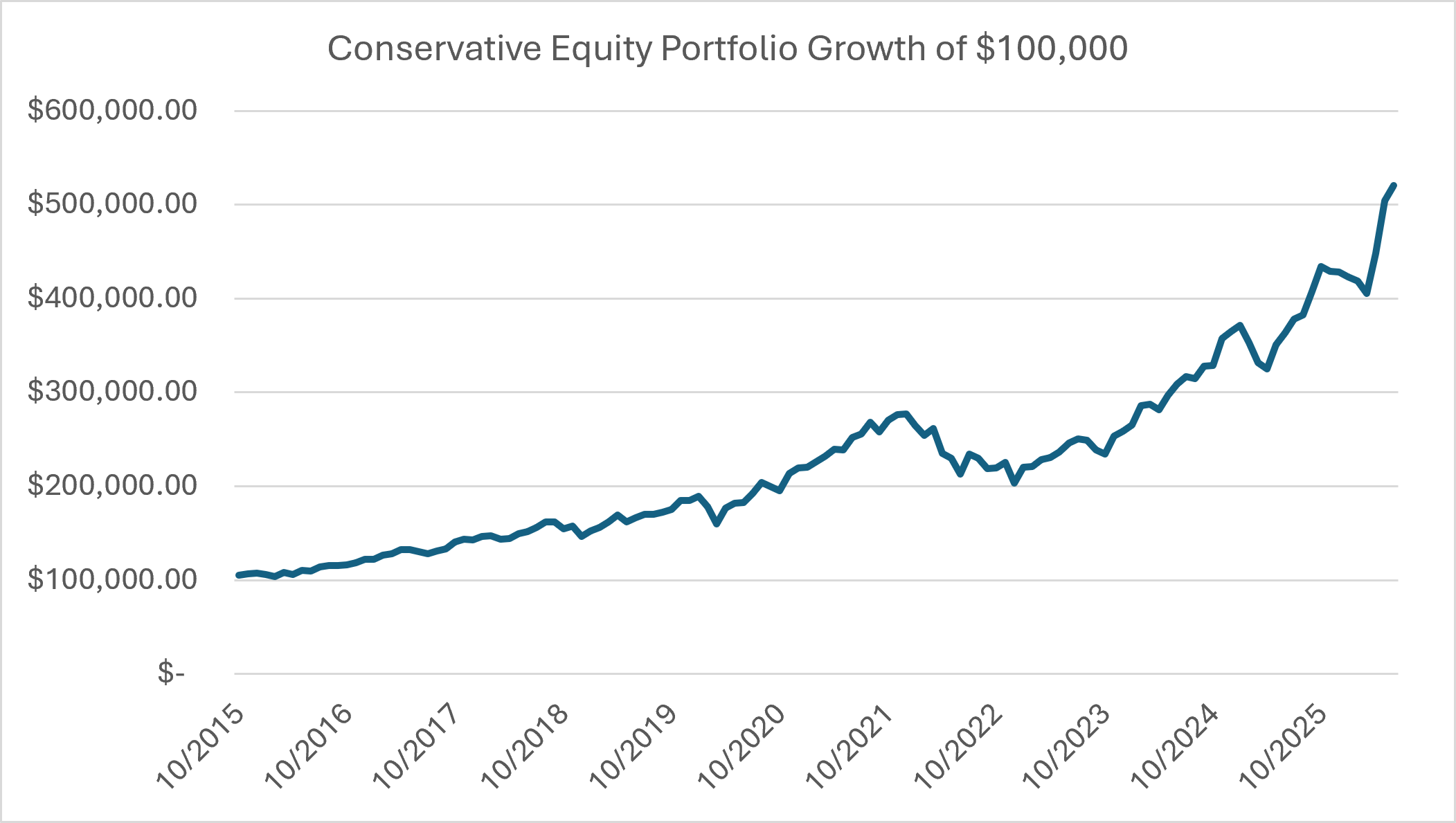
Our portfolios experienced some underperformance in the first quarter of the year, but we stuck to our convictions, held our largest positions, and experienced a strong outperformance in the second quarter. When evaluating our performance, we always prefer to look at the long-term results, as that is where the true value of compounding is revealed.
|
As of June 30, 2026 |
YTD |
1Y |
3Y |
5Y |
SI |
|
CONSERVATIVE EQUITY TOTAL GROSS RETURN (CAD) |
21.5% |
43.1% |
28.3% |
15.6% |
16.6% |
|
Benchmark (50% DJ US Div 100; 45% S&P/TSX 60, 5% S&P Can T-Bill) |
14.1% |
25.0% |
16.9% |
10.6% |
|
|
Morningstar Category (Global Equity) |
9.4% |
22.3% |
17.4% |
10.0% |
|
|
|
|
|
|
|
|
|
DIVERSIFIED INCOME TOTAL GROSS RETURN (CAD) |
7.2% |
16.9% |
15.8% |
9.9% |
11.2% |
|
Benchmark (35% S&P Can Bond; 25% S&P Can Div; 25% DJ US Div 100; 10% MSCI EAFE, 5% S&P Can T-Bill) |
9.5% |
16.9% |
12.4% |
7.9% |
|
|
Morningstar Category (Global Neutral Balanced) |
6.1% |
14.7% |
12.0% |
6.7% |
|
|
|
|
|
|
|
|
|
FOCUSED TOTAL RETURN TOTAL GROSS RETURN (CAD) |
30.1% |
59.5% |
33.6% |
20.9% |
26.0% |
|
Benchmark (40% DJ US Div 100; 35% S&P/TSX 60, 20% S&P Can Bond, 5% S&P Can T-Bill) |
11.3% |
20.0% |
14.0% |
8.6% |
|
|
Morningstar Category (Tactical Balanced) |
6.7% |
15.4% |
11.0% |
6.0% |
|
|
|
|
|
|
|
|
|
S&P 500 (NR USD) – USA |
10.0% |
21.9% |
20.1% |
12.9% |
|
|
S&P TSX 60 (NR CAD) – CANADA |
11.2% |
30.7% |
21.8% |
13.7% |
|
|
MSCI EAFE (GR CAD) – EUROPE |
13.7% |
25.6% |
19.8% |
12.6% |
|
|
S&P CANADA ALL BOND |
2.2% |
3.3% |
|
|
|
*Your own returns will vary depending on the amount of fixed income you hold, cash flows in and out, and management fees.
Portfolio Changes: Trimming the Sails
Over the last two months, we have made a few sensible adjustments to the portfolio. We trimmed our positions in two chip companies—AMD and Micron Technologies—taking some profits after they rallied significantly and provided the majority of our year-to-date performance.
We reallocated those gains into more defensive, high-quality businesses to reduce overall portfolio risk.
Welcoming Chubb: The Beauty of a Boring Business
We also added a new name to the portfolio: Chubb Limited. We love boring, low-risk businesses, and Chubb fits the bill perfectly.
To be clear, this is the American insurance company, not the British security company known for safes and armored cars. Founded in 1882 by a group of New York merchants looking to insure their ships, the modern Chubb was formed in 2015 when Swiss-based ACE Limited purchased it for US$29 billion. Today, it is the world’s largest dedicated property and casualty insurance company, boasting a market capitalization of roughly US$140 billion.
Here is why we bought it:
The data below on Chubb’s combined ratio vs their competitors were taken from their most recent quarterly update:
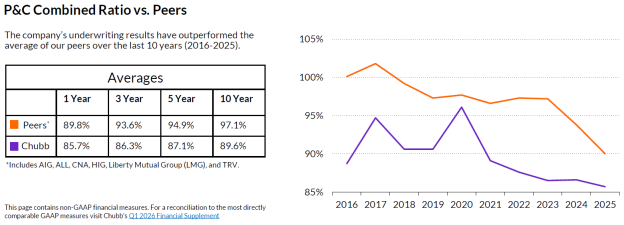
We purchased Chubb at an attractive valuation of about 12 times earnings. We anticipate they will grow earnings by roughly 9% annually, which, combined with a 1% dividend, provides us with a very safe and conservative expectation of a 10% baseline return with further upside depending on conditions.
Semiconductors: The Picks and Shovels of Tomorrow
While we trimmed AMD and Micron, we still deeply respect their business models. Both operate in high-growth markets characterized by supply shortages, complex manufacturing processes, and multi-year order backlogs.
The AI landscape is shifting from “training compute” (building the models) to “inference compute” (running the daily operations of AI agents). As AI agents perform thousands of tasks daily, the demand for traditional CPUs alongside specialized AI chips is skyrocketing. Industry projections for server CPU sales growth over the next four years have doubled from 18% to 35% per year, meaning the world will need roughly 130 billion new CPUs by 2030, dramatically increasing AMD’s growth projections.
On the memory side, Micron is uniquely positioned to benefit from the massive memory requirements of these AI agents, granting them record profit margins. We see demand increasing even further as things begin to develop on the autonomous driving and robotics front over the next 5 years.
Earnings Expectations and Key Catalysts
As the Q2 earnings season begins, we expect our companies to report revenue and earnings beats, paired with larger capital expenditure (CapEx) announcements. This may cause some short-term volatility, but we see this infrastructure spending paying off rapidly.
We are closely watching two key holdings:
The SpaceX IPO: Patience Over Hype
You may have seen that SpaceX recently completed the largest IPO in history, debuting at a US$1.7 trillion market capitalization. While we love the company, we elected not to purchase shares for our clients.
The issue is structural risk: the initial public float was only US$80 billion (roughly 5% of the company). As lock-up periods expire over the next 12 months, a flood of new shares will enter the market, which will likely introduce selling pressure.
That said, their long-term thesis is phenomenal. They are building a global communications monopoly through Starlink’s “direct-to-cell” capability. Their reusable rockets have slashed the cost of reaching orbit by 90%, and their new Starship aims to bring the cost down by another order of magnitude, to just US$100–US$200 per kilogram. Finally, Wall Street is modelling a massive future business in “Orbital AI Compute”—launching AI data centers into space to take advantage of continuous solar power and easy cooling.
We also heavily suspect an all-stock merger between SpaceX and Tesla may occur within the next 12 months, given their overlapping business interests. We will patiently monitor the situation.
The Macro View: A New Fed Chair and the Canadian Dollar
In the United States, Kevin Warsh was sworn in as the new Chairman of the U.S. Federal Reserve (the Fed) on May 22. He is bringing much-needed common sense and modernization to the institution, establishing five task forces to reform the Fed communications, balance sheet policy, economic data gathering, productivity analysis, and inflation frameworks. Warsh believes AI will be a deflationary force, though the Fed will maintain its 2% inflation target. We are very excited about these efficiency-driven changes.
Closer to home, the Canadian macroeconomic picture requires caution. The Canadian dollar lost roughly 4.5% against the U.S. dollar over May and June.
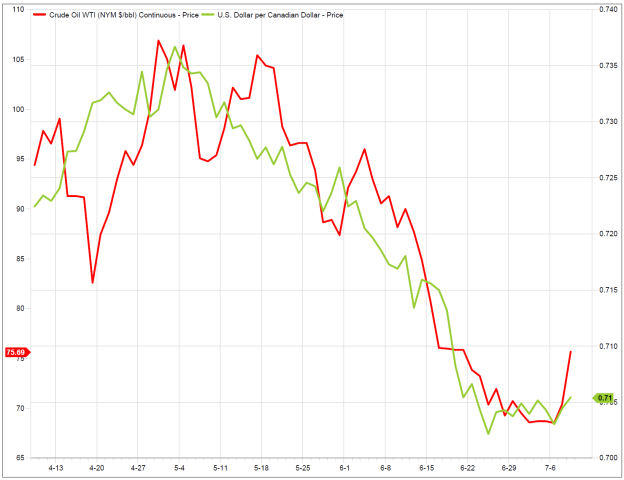
As the charts above demonstrate, our currency is heavily pressured by falling oil prices. Weak gross domestic product numbers were temporarily masked by a spike in oil prices due to Middle Eastern conflicts, but as oil prices normalize, that support will vanish in Q3.
Compounding these issues, the U.S. has formally stated they do not wish to renew our free trade deal, triggering a 10-year expiration clock with an option to exit with just six months’ notice. Uncertainty is the enemy of business investment; the longer we remain in negotiations without a clear deal, the more corporate capital will flow to the United States instead of Canada.
Looking Ahead
While we expect some summer volatility—particularly in the technology sector—we remain firmly optimistic about the long-term compounding machines we own. The S&P 500 currently sits around 7,400. Our target for the end of the year remains 8,000, and our 2030 target stands at 15,000.
Thank you for your continued trust and partnership. Enjoy the rest of your summer and we look forward to our next update after earnings season.
Warmly,
Michael & Simon Hale