Stepping Back: The 30,000-Foot Market View
One of the recurring challenges in writing our quarterly commentary is that by the time it reaches publication, parts already feel dated. This feels especially pronounced today as the pace of change appears to be accelerating.
After the S&P 500 declined by roughly 10 percent by the end of March, it took just 11 trading sessions to fully recover — among the fastest recoveries on record. As one market observer noted, “for situation monitors, the whiplash is a thing to behold…for everyone else, they may not have even noticed.” More notable was the speed at which the narrative reversed. By late March, many big-tech valuations appeared more fairly valued; by late April, they again appeared stretched.
The increasing frequency of such rapid shifts raises a broader question: Does this reflect a changing market regime?
Part of the explanation may lie in how the investing landscape itself has evolved over recent decades. Information is now disseminated globally in seconds. Combined with trading automation and declining transaction costs, this has contributed to a significant increase in market activity. In the late 1980s, the New York Stock Exchange averaged around 500 million shares traded daily; by 2020, this figure had doubled to over one billion.1
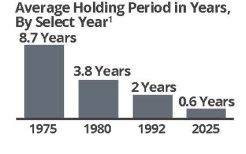
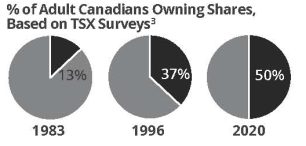
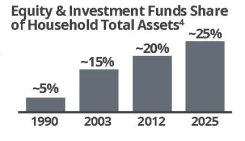
Participation has also become democratized. Building a diversified portfolio once required meaningful capital. Today, internet access and low-cost, diversified products have lowered barriers to entry. In 1990, equity and investment fund units represented just six percent of Canadian household assets. In 2025, they accounted for over 25 percent.2 This has also influenced investor behaviour. The average holding period for a stock, once spanning years, is now measured in months.
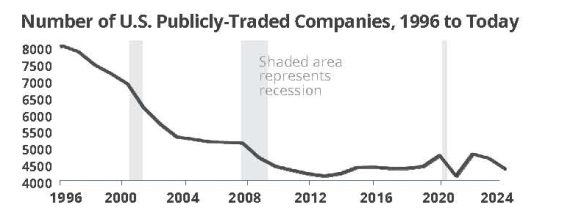
At the same time, market structure has shifted. What many may not realize is that the public company universe has contracted. U.S.-listed companies have halved from about 8,000 in 1997 to 4,000 today.3 Yet global market capitalization has expanded from about $50 trillion in 2011 to over $140 trillion today, with the rise of dominant U.S. and Asian corporates.4 Despite the shrinking public company universe, the range of investment products has expanded significantly. ETFs and derivatives now allow far more robust portfolio construction. Private equity and other alternatives, once largely reserved for institutions and ultra-high-net-worth investors, are more broadly accessible.
Meanwhile, even as total market values have risen, capital sitting on the sidelines has grown. U.S. money market funds have doubled to $8.2 trillion from their $4 trillion pandemic levels.5
Taken together, these shifts raise important questions: how should markets behave in an environment defined by faster information flow, lower barriers to entry, broader investor participation, yet fewer public companies and deeper sidelined liquidity? Do these changes imply a permanent shift in market behaviour? Are today’s valuations a reflection of these forces in action? It is plausible that markets have entered a period where sharper but shorter bursts of volatility and rapid narrative reversals become more common. Perhaps the anatomy of future bull and bear markets will also differ from those of the past.
At the same time, it’s important not to lose sight of the broader context. If you invested $100,000 in the S&P/TSX Composite Index 30 years ago, it would have grown to over $1.4M today.* Markets may evolve and narratives may shift, but long-term wealth creation has remained remarkably consistent. Indeed, it may be the golden age of investing, where more investors participate in one of the greatest wealth-creation periods in financial history.
A personal note: Just as we’ve stepped back from the headlines for this commentary, we hope you, too, will find time to step away this summer. We remain here taking care of things on your behalf and are available should you require assistance. Enjoy the sun!
*With reinvested dividends.
1. www.visualcapitalist.com/the-decline-of-long-term-investing/
2. https://www.nbc.ca/content/dam/bnc/taux-analyses/analyse-eco/mkt-view/market_view_250313.pdf
3. https://data.worldbank.org/indicator/CM.MKT.LDOM.NO?locations=US
4. https://en.wikipedia.org/wiki/Market_capitalization
5. https://www.apolloacademy.com/understanding-demand-for-treasuries-and-why-the-yield-curve-is-steepening/
The Intersection of OIL & ARTIFICIAL INTELLIGENCE
What Jevons Paradox Tells Us About the World Around Us
Jevons Effect (Jevons Paradox, “Jee-vons”):
An economic theory suggesting that efficiency gains can increase, rather than reduce, total consumption.
In 1865, British economist William Jevons observed a seeming paradox with the rise of the steam engine and its effect on coal consumption. As coal use became more efficient, he expected total coal consumption to decline. Instead, it surged. This observation remains relevant to the world around us.
Will the Middle East Conflict Reshape Global Energy Strategy?
In the spring, the Strait of Hormuz exposed the risks of routing roughly 20 percent of global supply through a single chokepoint. The resulting disruptions not only drove fossil fuel prices sharply higher but reinforced a broader reality: energy security is inseparable from national security. This has raised the question of whether it will accelerate a structural shift in global energy strategy.
Indeed, recent developments have prompted many nations to revisit their energy policies, including renewed interest in alternative sources aimed at reducing dependence on imported fossil fuels. However, expectations of a rapid decline in fossil fuel use may be overly optimistic. Even as efficiency improves, total oil demand has proven resilient — an outcome consistent with the Jevons effect. Today, while energy use per unit of GDP has declined over two decades, total energy consumption has not. Global oil consumption now exceeds 100 million barrels per day, up from around 60 million just half a century ago. In the U.S., per capita energy use has only declined at around half the pace of efficiency gains.1
What Jevons May Explain About Artificial Intelligence (AI)
This same effect may also apply to the evolving technological landscape. Given the rapid advancement of AI, there has been significant debate over whether it will replace labour. However, some economists argue that a Jevons-style dynamic is more likely: as the cost of AI-powered cognition falls, the total market for human intelligence may expand.2 For example, as AI makes professional services, such as legal work, accounting, consulting and financial analysis, cheaper and more efficient, overall demand could increase. Some studies already show that AI-exposed industries continue to see job and wage growth, suggesting that productivity gains may be complementing workers rather than replacing them. At the same time, certain entry-level roles, particularly for recent graduates, appear to be under pressure.
Of course, technological inflection points have always reshaped labour markets, with some jobs being displaced. Yet history also reminds us that new jobs are created and others augmented. For instance, when ATMs were introduced, many predicted the end of bank tellers. While teller roles initially declined per branch, ATMs reduced operating costs and enabled banks to open more branches. Similarly, in healthcare, advances in medical imaging raised concerns about radiologists becoming obsolete. Instead, imaging demand increased substantially due to lower costs and an aging population, and radiologists continue to be essential for interpreting and integrating results.
1. https://www.eia.gov/todayinenergy/detail.php?id=48976
2. https://www.apollo.com/wealth/the-daily-spark/the-jevons-employment-effect-from-ai
change is imminent: FOUR GRAPHICS
The Difference 30 Years Makes: How the Investing Landscape Has Changed
As the front-page story highlighted, the investing landscape has changed dramatically over recent decades. Here are four ways:
1. Based on TOTMKUS Index; holding period = 1/turnover ratio; https://www.cibc.com/content/dam/cibc-public-assets/asset-management/pdfs/short-term-orientation-of-equity-market-en.pdf#
2. https://data.worldbank.org/indicator/CM.MKT.LDOM.NO?locations=US; https://www.apolloacademy.com/public-equity-markets-have-changed-why-do-portfolios-still-look-the-same/
3. www.visualcapitalist.com/ranked-top-countries-by-stock-market-ownership/; https://www.cbc.ca/news/business/survey-says-almost-half-of-canadian-adults-own-stocks-1.208778
4. https://www.nbc.ca/content/dam/bnc/taux-analyses/analyse-eco/mkt-view/market_view_250313.pdf
housing season IS Back in full swing
Helping (Grand)Kids Buy a Home: Five Ways to Structure Support
In 2025, 41 percent of first-time homebuyers received down-payment gifts averaging $74,570, highlighting the significant role family members play in helping the next generation enter the housing market.1 For many high-net-worth families, there is value in seeing wealth put to use during one’s lifetime. However, support can take many forms, each carrying different tax and family law implications. When there are multiple children, it may also be important to consider how financial assistance to one child may affect fairness among siblings, and revisit an estate plan accordingly.
Here are five ways to structure support and related considerations:
Provide a Gift — When providing a financial gift to a child, you relinquish ownership and control of those funds. As a result, there’s a risk that funds won’t be used for a home purchase, or could become subject to division in the event of a future relationship breakdown, depending on how the purchase is structured. While Canada does not impose a gift tax (unlike the U.S.), liquidating investments to fund a gift may trigger taxable capital gains or other taxable income.
Leverage Tax-Advantaged Accounts — Rather than providing a large lump sum gift, consider planning ahead through smaller contributions over time to help a child maximize tax-advantaged accounts. Both the First Home Savings Account (FHSA) and Registered Retirement Savings Plan (RRSP) provide tax advantages through tax-deductible contributions. The FHSA is particularly compelling because investment growth is tax-free and qualifying withdrawals to purchase a first home are also tax-free. Under the RRSP Home Buyers’ Plan (HBP), withdrawals of up to $60,000 can be made tax-free (subject to repayment) for the purchase of a first home. Beyond the significant tax advantages, these accounts can help reinforce the value of saving and longer-term investing.
Loan Funds — Instead of an outright gift, funds may be advanced as a loan, with or without interest. A formal loan agreement should clearly set out repayment terms to avoid future misunderstandings. Proper documentation may help preserve the characterization of funds as a loan in the event of a relationship breakdown.* If desired, the loan can later be forgiven.
Co-Sign the Mortgage — This may help children qualify for a larger mortgage, secure more favourable borrowing terms or enter the market when they might not otherwise qualify. However, a co-signer is legally responsible for the debt if the borrower defaults. The arrangement can also affect the co-signer’s credit rating and borrowing capacity. In addition, trust reporting requirements may apply where the co-signer is required to be registered on title.
Co-Own a Property — While co-owning a property may help protect your interest in the event of a relationship breakdown, if you already own another property, the share of any future appreciation may be subject to capital gains tax upon sale or disposition.
Supporting a child’s home purchase is a significant and generous act. Since each form of support carries different financial, tax and family law implications, thoughtful planning can help ensure the outcome aligns with your intentions. For a deeper discussion, please call.
*The effectiveness of the loan in protecting against division in the event of a relationship breakdown may vary by jurisdiction and a family law lawyer should be consulted. This article is not intended to be a definitive analysis of family law.
1. https://www.cmhc-schl.gc.ca/professionals/housing-markets-data-and-research/housing-research/surveys/mortgage-consumer-surveys/2025-mortgage-consumer-survey
SUMMER JOB? build rrsp contribution room & a retirement nest egg
A Case Study: Why Help a (Grand)Child File a Tax Return?
As the saying goes, “Give the man a fish, and you feed him for a day; teach the man to fish, and you feed him for a lifetime.” The same principle applies to financial literacy. Small lessons introduced early, including something as simple as filing a tax return, can create habits and opportunities that benefit young people for years to come.
Is there a teen in your family, perhaps a (grand)child, niece or nephew, working during the summer or part-time after school? Helping them file a tax return can be a simple but powerful way to begin building long-term wealth while introducing financial habits early in life.
Many teens choose not to file a tax return if their income falls below the federal basic personal amount, which is $16,452 for 2026. What is often overlooked, however, is that even modest earnings can generate valuable Registered Retirement Savings Plan (RRSP) contribution room.
A Case Study: Building a Retirement Nest Egg From Age 14
Here’s a simple case study: At age 14, Sam begins working part-time as a lifeguard, earning $5,000 each summer. Her aunt helps her file a tax return, allowing her to accumulate RRSP contribution room at a rate of 18 percent of earned income, or $900 annually. Even without making RRSP contributions immediately, unused contribution room carries forward indefinitely. By age 22, after graduating from university, Sam has accumulated $8,100 of available RRSP room.
When she begins full-time employment and faces a 30 percent marginal tax rate,* she contributes the full $8,100 to her RRSP, saving approximately $2,430 in taxes ($8,100 x 30%). More importantly, if investing at an average annual return of 6 percent, that single contribution could grow to nearly $75,000 by age 60 — not a bad head start for someone just beginning their career!
And the lessons extend well beyond building a retirement nest egg:
Building Lifelong Financial Habits — Supporting teens in filing taxes early can help instill financial literacy and disciplined money management habits that can carry into adulthood, when tax returns will become a necessary part of managing personal income.
Tax-Deferred Growth and Future Tax Savings Potential — Unused RRSP room accumulated in early years can later be used to reduce taxable income, potentially increasing tax savings by claiming deductions when income and tax rates are higher in adulthood.
Future Flexibility Through RRSP Programs — RRSP savings can later be accessed as an interest-free loan, including up to $60,000 under the Home Buyers’ Plan for an eligible first-home purchase, or up to $20,000 through the Lifelong Learning Plan for eligible education or training. With rising housing and education costs, every bit helps.
Encouraging a Long-Term Saving Mindset — Early exposure to saving and investing can help young earners develop consistency and discipline, reinforcing the value of long-term compounding even through small contributions.
*Illustrative. Tax rates will vary depending on income and the province/territory of residence.
Time for a review?
Beneficiary Designations Matter More Than You Might Think
Beneficiary designations matter more than many people realize. Every so often, we hear about situations where an outdated beneficiary designation overrides instructions in a will; for example, when a registered account names a former spouse, resulting in assets being paid directly to that individual regardless of the current will.1,2
In many cases, the issue stems from beneficiary designations being overlooked or forgotten after accounts are opened. As life circumstances change, years can quickly pass without these instructions being remembered and reviewed.
However, beneficiary designations on registered plans — such as RRSPs, RRIFs and TFSAs* — carry broader implications, even beyond outdated instructions. They can affect the administrative efficiency, tax treatment and ultimate distribution of your assets. Reviewing these designations periodically can help ensure they remain aligned with your objectives.
Why Name a Beneficiary?
Designating a beneficiary offers several advantages:
1. Ease of transfer — Plan assets can pass directly to the beneficiary, bypassing the probate process, which often delays distribution.
2. Reduced estate costs — Probate or estate administration fees may be avoided (depending on the jurisdiction).
3. Flexibility — Beneficiaries can differ from those named in a will.
Tax Implications of Beneficiary Designations
Naming certain beneficiaries can defer or reduce taxes on registered plans:
Understanding the “Successor” Designation
For RRIFs and TFSAs, naming a spouse/partner as a successor, rather than just a beneficiary, can offer additional tax and administrative advantages:
When Was the Last Time You Reviewed Account Beneficiaries?
Regularly reviewing and updating beneficiary designations helps keep your estate plan aligned with your wishes, protects loved ones and can maximize what you pass on. If you haven’t reviewed yours recently, now is a great time. Please get in touch, and always consult legal and tax professionals to ensure your designations support your broader estate planning goals.
*Note: In Quebec, beneficiary designations are generally not recognized on these plans. Related assets are distributed through the individual’s will or marriage contract.
1. https://www.theglobeandmail.com/investing/globe-advisor/advisor-news/article-ontario-court-rules-registered-plans-belong-to-designated-beneficiary/
Three Common Beneficiary Designation Mistakes
in need of Positive PERSPECTIVES?
Oh Canada! Reasons to Embrace Our Nation
Respected economist Paul Krugman recently wrote an article, “What Happens When Americans Realize How Miserable We Are?” His main takeaway was that “life is about more than GDP” — a striking framing for someone who has spent much of his career analyzing it. His broader point is that few people realize how much the U.S. is falling behind other advanced nations on basic aspects of quality of life, such as health and safety.1
That distinction matters for Canada. We haven’t had a lot of good news lately. We’ve moved from the pandemic into an era of persistent inflation. Just as price pressures were finally easing, renewed trade tensions with the United States, and then a Middle East war, introduced fresh inflationary pressure and uncertainty.
Yet, stepping back, Canada continues to perform strongly among advanced economies on a variety of metrics. What follows is a reminder of the structural strengths that often get lost in periods of short-term economic and political uncertainty:
We rank third in the G7 in terms of GDP per capita.2 While we lag behind the U.S., one economist suggests Canada’s GDP figures may not be as comparatively weak as they appear. He argues: “A major flaw in GDP as a measure of economic productivity is how it fails to properly value public-sector output. While private sector outputs are easy to quantify through market transactions, public services — like healthcare and education — are trickier to value. Countries that rely more heavily on public services, like Canada, are penalized in GDP comparisons.”3
Krugman similarly suggests that Europe’s lower GDP per capita relative to the U.S. is partly explained by greater leisure time. While the Germans and the French are roughly as productive per hour as Americans, because they receive 25 to 28 days of paid leave every year, this skews the data downward.1
We have relatively low income inequality. While Canada’s income gap has widened, we remain tied for second in income equality in the G7, as measured by the Gini coefficient, which quantifies how much the distribution of income deviates from perfect equality. By contrast, the U.S. has the highest income inequality in the G7. High inequality is often associated with lower social mobility, instability and weaker welfare outcomes.3
We hold a relatively high life expectancy. Canadians live longer, on average, than Americans, with an average life expectancy of 83.05 years. This is significantly higher than our neighbour to the south, at 79.76 years.4
Despite recent increases, our crime rate remains relatively low. As measured by the 2023 homicide rate, Canada recorded 1.98 homicides per 100,000 inhabitants, compared to the U.S., which had closer to 6 homicides per 100,000.5
We have high political stability. In an increasingly volatile world, stability and reliability are increasingly valued. According to one source, Canada places 4th globally for economic stability and 1st among G20 countries for fiscal soundness. Across political, social, institutional (government) and cultural indicators, Canada maintains significant comparative strengths.6
Our healthcare outcomes are strong. Despite an overburdened and under-resourced healthcare system, nearly 89 percent of Canadians reported being in good health — the highest score across all OECD countries. This is slightly ahead of the U.S. (88 percent) and far above the OECD average of 68 percent.3,7 The U.S. spends 16.5 percent of its larger per-capita GDP on healthcare, compared to 11.2 percent in Canada, despite both countries having a comparable number of doctors and nurses per capita.
We have a solid foundation for labour productivity. Canada leads the G7 in women’s labour-force participation. We also rank 7th globally for average working hours8 and now boast the world’s most highly educated population, having the greatest share of adults holding a tertiary degree.9 These are important drivers of productivity and innovation.
We are a resource-rich nation. Canada ranks 4th globally by natural resource value.10 Despite accounting for only 0.5 percent of the global population, Canada is the second-largest country by landmass. We have three coastlines and an abundance of freshwater resources, which are becoming increasingly valuable and strategic in a resource-constrained world.
Canadian household wealth continues to grow. At the end of 2025, household wealth reached a new high at $18.59 trillion, with average household net worth rising to $1.08 million; more than a 30 percent gain from pre-pandemic levels. Every generation saw gains, with Gen X and Millennials experiencing double-digit growth. Wealth has now increased for eight consecutive quarters. Even lower-income Canadians have seen disposable income rise, albeit at a slower rate than the national average.11
We hold one of the world’s most powerful passports. The Canadian passport remains one of the most valuable globally, offering significant mobility. In the 2026 Global Passport Ranking, Canada ranks 7th globally, granting visa-free access to 182 countries. Singapore tops the list, with access to 192 countries.12
Though challenges lie ahead, as we break for the summer, we hope you will take some time to reflect on the many strengths that make Canada a wonderful place to call home.
1. https://paulkrugman.substack.com/p/what-happens-when-americans-realize
2. https://www.voronoiapp.com/economy/GDP-Per-Capita-Projections-for-G7-Nations-1562
3. https://macleans.ca/economy/why-canadas-economy-is-just-fine/
4. https://www.worldometers.info/demographics/life-expectancy/
5. https://www.statista.com/statistics/1374211/g7-country-homicide-rate/
6. https://www.investcanada.ca/stability
7. https://www.cma.ca/healthcare-for-real/how-does-canada-rank-health-care#
8. https://www.visualcapitalist.com/ranked-average-working-hours-by-country/
9. https://www.oecd.org/en/data/indicators/population-with-tertiary-education.html
10. https://www.visualcapitalist.com/ranked-top-10-countries-by-value-of-all-their-natural-resources/
11. https://financialpost.com/wealth/canadian-households-how-do-you-stack-up
12. https://www.henleyglobal.com/passport-index/ranking
beyond estate planning: Powers of attorney
What Happens When a Child Becomes an Adult?
Ever wondered how much it costs to raise a child? In Canada, estimates suggest it will set parents back an average of $293,000 from birth to age 17.1 In the U.S., that figure may be even higher, estimated at roughly US$303,418, even after tax credits.2
But those figures only tell part of the story. For many families, financial support often extends well beyond age 18. Parents frequently continue contributing to post-secondary education or training, helping with the purchase of a first home, or providing housing for adult children who haven’t yet fully launched on their own (some suggest the “empty nester” is increasingly being replaced with the rise of the adult “stay-at-home son” (daughter)).
This creates a subtle but important disconnect: financial dependence does not necessarily align with legal adulthood.
Turning age 18, or 19 in some provinces/territories (the age of majority), is a milestone worth celebrating. It marks a moment of independence and, in many ways, a shift in financial responsibility. But it also triggers a less visible transition: a legal one. At that point, the law treats a child as an adult. And critically, parental authority changes overnight. Many families don’t fully realize the implications until they are already in a situation where access or decision-making is unexpectedly restricted.
Even if a child still lives at home, remains financially dependent or is in school, the legal reality is the same. Without proper planning, parents may find themselves unexpectedly facing certain situations:
These limitations can become particularly challenging if a child is away from home, such as attending college or university, managing chronic health needs or living independently for the first time.
This is where powers of attorney for personal care and property (the names vary by province or territory) can become essential planning tools. They allow parents or trusted individuals to step in if support or decision-making is needed, even after a child reaches adulthood.
For high-net-worth families with significant assets, this transition also raises broader considerations around gifting, trusts and control of assets. At the age of majority, children may gain full legal authority over assets held in their name — sometimes before they are fully prepared to manage them. This makes early coordination around gifting strategies, trusts and asset structuring especially important.
The transition to adulthood happens whether families are ready or not. Without a plan, gaps can emerge that create unnecessary risk, confusion and stress at precisely the wrong moment.
If your child is approaching or has reached the age of majority, it may be a good time to review your existing plans and ensure appropriate powers of attorney and supporting documents are in place. We would be pleased to discuss how this fits within your broader financial and estate planning strategy.
1. https://www.statcan.gc.ca/o1/en/plus/5111-how-much-do-canadian-families-spend-raising-child
2. https://www.cbsnews.com/news/cost-to-raise-a-child-300000-us-state-by-state/
From Financial Experts: “Five-Word” Advice for New Adults
If there’s a young adult in your life stepping into adulthood, a few simple lessons can go a long way. The best advice is rarely complicated. If there’s one thing financial writer Morgan Housel wished he’d known when he first started out in the real world, it was just five words: “Simple almost always beats complex.” As he put it, “That’s true for investing, mortgages, insurance and everything else related to money.”
In that spirit, Housel asked some of his financial expert peers for their words of wisdom, condensed into “five-word” advice. These are worth passing along:
Budget. Save. But enjoy yourself. — Ben Carlson
https://www.fool.com/investing/2016/06/21/simple-financial-advice-for-new-grads.aspx
Retirement planning considerations
Planning Ahead: Giving Forethought to “Rightsizing” Your Home?
This may sound familiar: your first home started out small, but as your family grew, you needed more bedrooms and a larger backyard. Now the children have left the home, and those bedrooms sit empty — but over the years, rising housing prices may have helped you build significant equity in your home. Perhaps you’re asking: Is there an opportunity to “rightsize”?
Downsizing can provide financial advantages by unlocking home equity and reshaping both lifestyle and financial flexibility. A smaller home typically reduces maintenance, utilities and property tax bills, while freeing capital for other priorities. Accessing home equity may help strengthen retirement cash flow, support family members or fund new goals.
However, fewer people are choosing to downsize. Many prefer to remain in their homes as long as possible. A recent survey found that among those 65 and older, just 16 percent plan to downsize in the next decade, while 57 percent wish to remain in their current home.1
This shift reflects broader changes in housing economics and retirement planning. In the past, homeowners more commonly viewed real estate as a retirement resource. Today, that assumption is less prevalent. Longer life expectancy, improved health in later years and higher overall wealth have contributed to a greater ability to remain in place. At the same time, rising real estate costs, including seniors’ housing, have reduced the net financial benefit of downsizing, limiting the equity released.
Several other factors may also influence the decision:
Emotional impact. Downsizing is not purely financial. Long-time homes are often tied to memories, routine and identity — factors that can delay decisions long after the financial case becomes clear.
The cost of moving. Selling expenses, including legal fees and commissions, can account for a meaningful portion of proceeds. Preparing a home for sale (including staging or repairs) adds further expense, as do moving costs and updates needed to settle into a new property. The process itself can create administrative complexity and require a substantial time commitment.
Market uncertainty. Limited inventory has made it difficult for some homeowners to find a suitable replacement property, while market price fluctuations can affect what a sale will ultimately yield. In many markets, prices have shifted from their highs, making the sale of an existing home less attractive.
Trade-offs in housing flexibility. Moving to a rental or community setting may reduce maintenance responsibilities but can introduce uncertainty around lease terms, fees and future cost increases. Ownership typically provides greater control and predictability.
It’s Not Just a Financial Decision
Yet the decision to downsize isn’t simply a financial one. As life circumstances evolve, including changes in energy, health and mobility, the question often shifts from whether downsizing is financially optimal to whether a current home still fits day-to-day life.
Those who successfully transition tend to act proactively, motivated by what their next home offers, whether it’s simplicity, convenience or a better lifestyle fit. A recent Globe and Mail article suggested that the best time to plan a downsize is “when you’re still excited about what comes next.”2 The argument is straightforward: it’s better to decide on your own terms, before health issues or practical limitations force the issue. Waiting too long can mean the choice is driven by necessity rather than preference, often under pressure from family members or advisors.
Start Early
As with any major financial decision, planning is important. Take the time to explore your options before circumstances force the decision. If you’re considering relocating to a new community, city or province, spend time there during different seasons to understand what day-to-day life might look like. If you’re thinking of moving abroad, understand the tax, healthcare and residency implications. For condo living, review bylaws and restrictions carefully; details like pet policies or renovation rules may significantly affect your experience.
A thoughtful approach allows you to weigh both the financial and lifestyle implications before making a decision. While “rightsizing” your home may mean it becomes smaller, the opportunities ahead can expand in meaningful ways.
1. https://www.bnnbloomberg.ca/business/real-estate/2026/05/03/not-the-right-time-retirees-delay-downsizing-plans-as-housing-market-slumps/
The Next Five Years: Is It the Beginning of a Silver Tsunami?
Is the housing market set to undergo a transition as Canada experiences a demographic shift? While older Canadians are staying in their homes for longer, consider that a significant portion of Canadians will be aging in the coming decade:
Could these demographic shifts meaningfully alter housing supply and pricing dynamics in some markets?
Beyond the Existential Fear of AI
Challenging the Artificial Intelligence Job Apocalypse
Is artificial intelligence (AI) coming for your job? According to The Economist, one in three people believe AI will cause widespread job losses, while seven out of 10 believe it will make it harder for people to find work.
Beyond the geopolitical volatility dominating headlines, the “AI job-apocalypse” has become a common narrative. It doesn’t help that the unemployment rate has been creeping upward, and that many recent college and university graduates are struggling to find work.
Of course, there’s no doubt that AI improves productivity. A recent paper from Stanford University examined how large language model tools (generative AI systems known as LLMs) are already significantly improving productivity across a range of knowledge-based tasks. The results are striking. In every common work task that was studied, generative AI reduced completion time by at least half, and in most cases by around 70 to 75 percent. The study also found that LLM adoption among U.S. workers rose significantly from 30.1 percent as of December 2024 to 38.3 percent as of December 2025.1
Given the proven capabilities and rapid advancement of AI, it will undoubtedly eliminate some tasks and compress certain roles. There is evidence that this may already be happening.2 However, the notion that AI will imminently create permanent, widespread unemployment might be exaggerated.
How Many Minutes Does AI Save? Select Work Tasks1
|
Task |
Time With AI |
Time Without |
% Change |
|
Operations Analysis |
31 |
98 |
-68% |
|
Systems Analysis |
31 |
87 |
-64% |
|
Programming |
33 |
129 |
-74% |
|
Technology Design |
39 |
142 |
-73% |
|
Equipment Maintenance |
34 |
124 |
-73% |
|
Personnel Management |
32 |
103 |
-69% |
Historically, productivity gains have often expanded economic activity rather than contracted it, creating new industries, new demand and ultimately new forms of employment. A related dynamic is seen in the Jevons Paradox: efficiency gains lower costs, which tends to increase overall consumption rather than reduce it. William Jevons observed this phenomenon in the 19th century when improvements in efficiency led to greater overall coal consumption, not less.
We’ve been here before. In 1951, when IBM introduced its electronic calculator, it was promoted as capable of replacing 150 engineers. Yet, 75 years later, engineers remain indispensable. Every major platform shift arrives with the familiar promise and worry: more output, fewer people, instant transformation. In recent decades, similar fears surrounded radiologists, telemarketers and travel agents. In practice, technology augmented these professions rather than eliminating them outright.
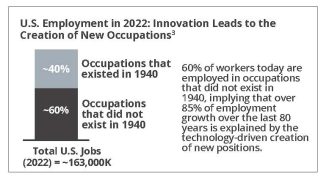
Then there are the jobs that do not yet exist. One study suggests that technology has facilitated the creation of new occupations that now employ 60 percent of workers today.
Indeed, the labour market will evolve, as it always has when transformative technologies emerge. But worries of widespread and permanent unemployment may ultimately prove to be a shortsighted view of the world ahead.
1. https://papers.ssrn.com/sol3/papers.cfm?abstract_id=5136877
2. https://fortune.com/2026/04/06/ai-tech-displacement-effect-gen-z-16000-jobs-per-month/
3. https://www.gspublishing.com/content/research/en/reports/2023/03/27/d64e052b-0f6e-45d7-967b-d7be35fabd16.html

LESSONS LEARNED FROM THE war in the middle east
Our Continuing Dependence on Oil: Will the Energy Landscape Shift?
The conflict with Iran served as an abrupt reminder of energy’s central role in global order. In the spring, the Strait of Hormuz exposed the risks of routing roughly 20 percent of global supply through a single chokepoint. The resulting disruptions not only drove fossil fuel prices sharply higher but also reinforced a consequence that extends well beyond economics: energy security is inseparable from national security.
Canada learned this lesson in the 1970s during a period of similar external supply shock. Amid bell-bottoms and a Beatles’ breakup, that decade was defined by stagflation: high inflation, unemployment and weak growth. A major contributor was the 1973 oil embargo, with supply shocks that drove up global energy prices. Canada largely avoided the severe shortages seen in the U.S., but was still confronted with significant economic strain. Ottawa responded with price controls and, later, the National Energy Program to stabilize supply and reduce exposure to global shocks.
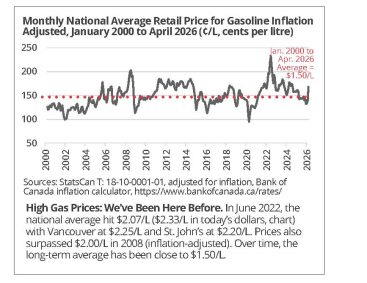
The legacy of that strategy is felt today, as we are considerably less vulnerable to energy shocks than in the past. Not only are we less energy intensive than in the 1970s, but Canada is now a net exporter of oil and natural gas, which provides a meaningful degree of insulation.1 As such, the events in the spring raised the question: why did gasoline prices rise so significantly at home? Canada does not import oil through the Strait of Hormuz, and most crude oil transiting that route is destined for Asian markets. Nevertheless, oil is priced globally. As a result, local prices respond to shifts in worldwide supply and demand regardless of where disruptions originate. When global oil prices rose by roughly 60 percent in April alone, those increases fed directly into domestic gasoline prices.
The conflict also prompted a broader question: Will the issues exposed by control over the Strait of Hormuz accelerate a broader energy shift? Indeed, recent events have prompted many nations to revisit their energy strategies, with renewed interest in alternative energy sources aimed at reducing dependence on imported fossil fuels. Yet expectations of a rapid decline in fossil fuel use may be optimistic. Even as efficiency improves, total oil demand has proven remarkably resilient.
A key constraint is the efficiency paradox, often referred to as the Jevons effect. Efficiency improvements lower the cost of using a resource, but those lower costs tend to increase consumption through substitution and income effects. William Jevons observed this phenomenon in the 19th century when improvements in steam engine efficiency led to greater — not lower — coal consumption. Today, global oil consumption now exceeds 100 million barrels per day, up from roughly 60 million a half-century ago, while the world remains 80 percent dependent on fossil fuels.2, 3
Structural demand resilience is only one side of the equation; supply-side coordination may also be beginning to shift. The conflict may have been a catalyst for reshaping global energy dynamics. The UAE’s decision to leave OPEC in the spring, departing the cartel it joined in 1967, may signal emerging fractures in traditional alignments. As a key producer with significant spare capacity, its departure could reduce OPEC’s ability to coordinate output and influence prices.
Perhaps most notably, in an era of heightened geopolitical uncertainty and renewed trade tensions, stability and reliability are commanding a growing premium alongside resource abundance. Canada’s role as a stable and proximate energy supplier reinforces its structural importance in global energy markets. This position should not be discounted, especially in an increasingly fragmented world. As one market observer noted at the height of the conflict, “oil and gas aren’t the only two commodities missing from world markets… so are trust and predictability.” Against this backdrop, Canada’s position has rarely looked stronger.
1. Energy intensity = energy consumed per unit of GDP.
2. https://www.worldometers.info/oil/
3. https://www.iea.org/reports/world-energy-outlook-2024/pathways-for-the-energy-mix
FIXEd-INCOME MARKETS
Are the Bond Markets Sending a Signal?
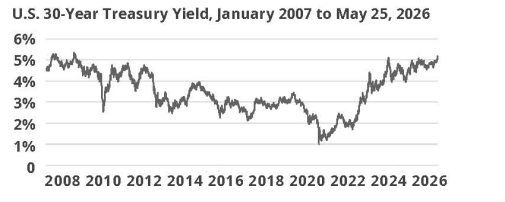
Many market observers have recently turned their attention to the fixed-income markets, as long-term government bond yields have risen to levels not observed in more than two decades. By the end of May, 10-year and 30-year U.S. Treasury yields had risen to levels last seen before the 2008 crisis. Japan’s long-end bond yields also surged to multi-decade highs. Even in Canada, government bond yields hit multi-year highs.
What has driven these moves? Concerns over rising inflation, fuelled by elevated oil prices, and geopolitical uncertainty stemming from the conflict in the Middle East, have prompted a sell-off in global bond markets, helping to push yields higher.
The value of a bond at maturity is fixed when the government issues it. However, inflation reduces the real value of those future payments, making existing bonds less attractive. Because bonds trade in secondary markets, falling prices translate into higher yields. As a result, when governments issue new bonds, they must offer higher yields, which pushes yields up across the curve.
But it is not just renewed inflationary pressure that has weighed on bond markets. Here are three other drivers:
Persistently large government deficits — Government debt in developed economies continues to rise, with limited signs of stabilization. To finance their deficits, governments must issue more bonds. This is particularly notable in the U.S., where borrowing needs remain elevated and defence spending increased amid recent geopolitical tensions. Japan’s debt burden has also risen substantially due to sustained government spending, reaching roughly 248 percent of GDP, the highest globally by this measure.1
Central bank balance sheets — Many central bank balance sheets expanded significantly through quantitative easing to support economies after the Global Financial Crisis of 2008-09. Central banks are no longer large-scale marginal buyers of government bonds and, in some cases, are actively reducing holdings through quantitative tightening. This represents a structural shift from the period when central bank purchases helped suppress yields and support liquidity conditions.
Investor premiums — Investors are demanding higher term and inflation-risk premiums amid ongoing geopolitical uncertainty. Higher U.S. yields can also attract global capital, putting upward pressure on yields elsewhere and weighing on bond prices globally.
What Does This Mean?
Higher long-term yields have historically weighed on equities through higher discount rates, though that relationship has been less consistent in recent years. So far, equity markets have largely shrugged off the bond market repricing.
Because bond markets anchor borrowing costs, higher yields are pushing consumer lending rates higher. The U.S. 30-year fixed-rate mortgage rate, the key barometer for housing finance, recently surpassed 6.5 percent. In Canada, the five-year yield, which forms the basis for five-year fixed mortgage rates, rose above 3.3 percent, its highest since July 2024. Typical five-year fixed mortgage rates now hover around 4.5 percent, which may feed into the ongoing slowdown in housing activity.
Complicating matters, elevated inflation has led to concerns that central banks will need to keep interest rates higher for longer, or raise them further, a sharp contrast to earlier in the year when inflation appeared under control and markets had largely priced in rate cuts. This comes on top of a meaningful erosion in purchasing power following years of aggressive fiscal and monetary stimulus, which has further widened the disparities between asset owners and wage earners.
The other problem, of course, is that higher interest rates increase government debt-servicing costs, further expanding deficits and contributing to higher debt levels over time.
What Can Investors Do?
Within a diversified portfolio, having some exposure to assets that behave more resiliently in this environment is important. This may include real assets, businesses with pricing power and companies that generate steady cash flows regardless of inflationary conditions. By contrast, areas of the market reliant on low discount rates face greater pressure, such as high-growth equities, long-duration assets and highly leveraged business models more sensitive to higher interest rates.
One lesson we’ve learned from our experience in the industry is that bond markets tend to send signals before they are widely acknowledged. When those signals strengthen, it is usually worth paying attention.