
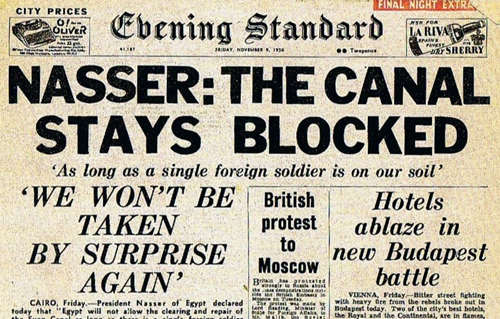
Evening Standard Headline, November 9, 1956
The Suez Crisis and the Origins of Energy Market Shocks
In October 1956, three governments sat down at a villa outside Paris and sketched out one of the most brazen conspiracies of the Cold War. The plan: Israel would invade Egypt’s Sinai Peninsula, and Britain and France would swoop in as “peacekeepers”—conveniently retaking the Suez Canal that Nasser had just nationalized.
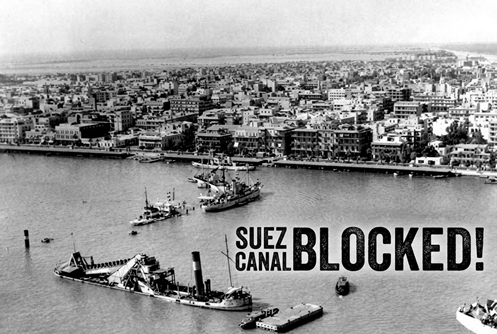
Image by Gemini
The agreement was so incriminating and embarrassing that the British Prime Minister later shredded his copy. The invasion itself went fine. What followed didn’t. Nasser sank 40 ships in the canal, choking off the waterway that carried two-thirds of Europe’s oil. Syria blew up pipelines in solidarity.
Overnight, a military adventure became an energy crisis. Sound familiar? Then Eisenhower, blindsided and livid, cut Britain off at the knees—blocking IMF assistance and refusing to defend the pound at the very moment investors were fleeing it. Sterling went into freefall. Britain withdrew—not because it lost the war, but because it couldn’t afford to win it.
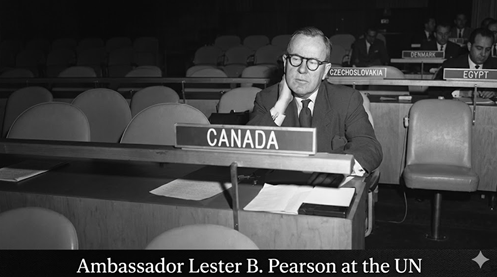
Source: Gemini
The man who brokered the peace was a Canadian. Lester Pearson invented UN peacekeeping, won the Nobel Prize, and cemented this country’s reputation as the world’s honest broker. A botched Middle Eastern adventure broke an empire, and a Canadian picked up the pieces.
Seventy years later, history is rhyming—and Canada holds very different cards.
Global Energy Crisis 2026: What Changed After the Hormuz Disruption
On February 28, the United States and Israel launched strikes against Iran. The opening salvo killed Supreme Leader Khamenei. Two weeks later, the conflict has spread across the entire region: retaliatory strikes on Israel, Gulf states, and U.S. bases; Dubai’s airport damaged; the Strait of Hormuz effectively closed; Brent crude past $100; the IEA calling it the largest supply disruption in the history of the global oil market.
We are not going to litigate the geopolitics. Who can predict what happens next between a mercurial American president and the cornered Iranian Islamic Regime? But here’s the thing: for Canadian investors, we don’t have to predict the outcome to see that the board has fundamentally changed. Whatever happens in the Strait of Hormuz next week or next month, the structural forces this conflict has unleashed will persist for years.
Canada’s Energy Opportunity in a Supply-Constrained World
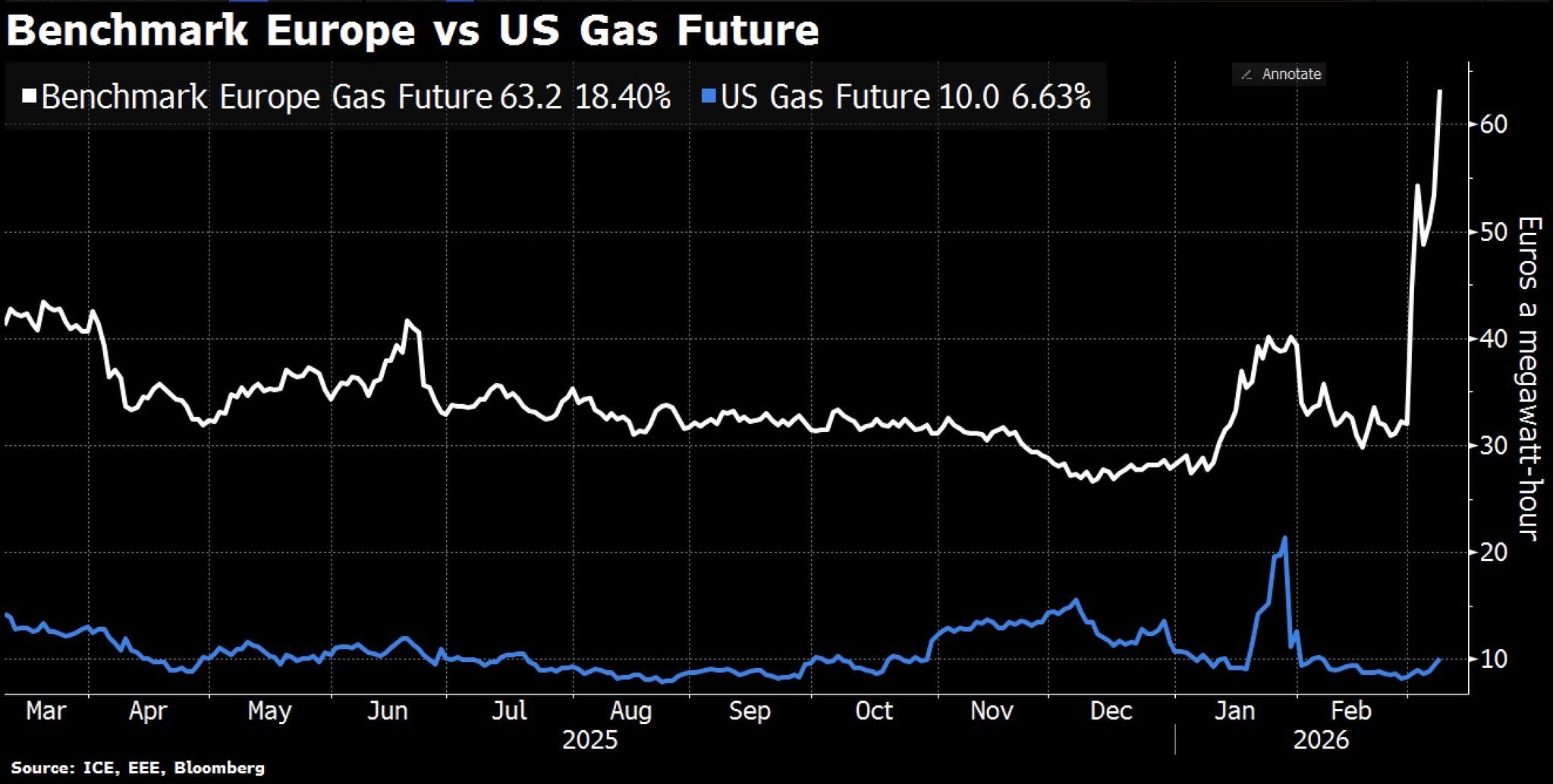
Benchmark Europe vs US Gas Futures source: Bloomberg, ICE, EEE, as 03/12/26
This chart is the most important image in this newsletter—it signals opportunity! European benchmark gas is trading at €63 per megawatt-hour. U.S. gas sits at $10. That is a 6:1 spread—and the Hormuz closure, with one-fifth of global LNG supply now stranded, is blowing it wider by the day.
Let’s be honest: Canada missed the first wave of LNG. While Australia, Qatar, and the U.S. built export terminals, we debated pipelines and held environmental hearings. LNG Canada is finally coming online, but a single terminal on the West coast is a rounding error against a global supply crisis. That was a costly failure of political will.
But this reshuffling of the board provides a second chance, if we can get out of our own way and actually build. The world needs non-Hormuz energy supply, and Canada has it in abundance. Countries that were content to buy from Qatar last month are now scrambling for alternatives. Every week this conflict persists, the case for Canadian LNG export capacity and the pipelines to feed it, becomes harder to ignore. For investors, the Canadian oil and gas sector and the pipelines look like beneficiaries.
The opportunity is even greater than energy.
Beyond Oil: Canada’s Role in Critical Minerals and Industrial Supply Chains
The Cold War 2.0 trade is where the real opportunity lies. As we laid out in our critical minerals piece, the structural forces are locked in: China controls the atoms, America controls the bits, and Canada sits on the raw materials the West needs to break the chokehold.
The Iran war has turbocharged every element of this thesis—and broadened it well beyond energy and minerals into chemicals and industrial feedstocks. The Strait of Hormuz doesn’t just carry oil. It carries 30% of the world’s seaborne fertilizer, 85% of Middle Eastern polyethylene exports, and one-third of the global helium supply. Qatar has declared force majeure on LNG—and helium, a byproduct of LNG production that Canada classifies as a critical mineral, has effectively vanished from the market with it. South Korea is already warning of semiconductor disruptions: no gas, no helium, no chips.
Canada has helium in Saskatchewan, potash and sulfur for fertilizer production, phosphate deposits now on the critical minerals list, and the petrochemical feedstocks that come with being a major hydrocarbon producer. Countries and companies that relied on Hormuz transit for these inputs are now desperately seeking new suppliers. This makes pipelines—the infrastructure we’ve been strangling with regulations for a decade—more important than ever, not just for energy but for the entire chemical and industrial supply chain the Western economy runs on.
For investors, the actionable themes remain: Canadian energy producers and midstream infrastructure, critical mineral miners with Western-aligned processing, uranium, fertilizer plays, and gold as the inflation hedge it was always meant to be.
The risk is stagflation. The opportunity is that Canada holds the keys to the new Cold War economy—if we can truly embrace our manufacturing, refining and exporting businesses. We have what the world critically needs.
The Bottom Line: Positioning Portfolios for the New Energy Reality
In 1956, Suez taught the world that markets, not battlefields, determine the limits of power. The 2026 Iran conflict is teaching the same lesson at a larger scale—both about blunders and opportunities. Energy markets are in upheaval. Hormuz is closed. The chemical supply chains that underpin global manufacturing are seizing up. Inflation risk is real and rising.
For Canadian investors, this reset is uncomfortable but clarifying. Canada has the energy, the minerals, the chemicals, and the strategic geography. The world needs what we produce. Our stock exchange is well positioned to benefit from this given our large weights in these sectors. Basic Materials, Energy and Industrials make up almost 50% of the index—that’s huge!
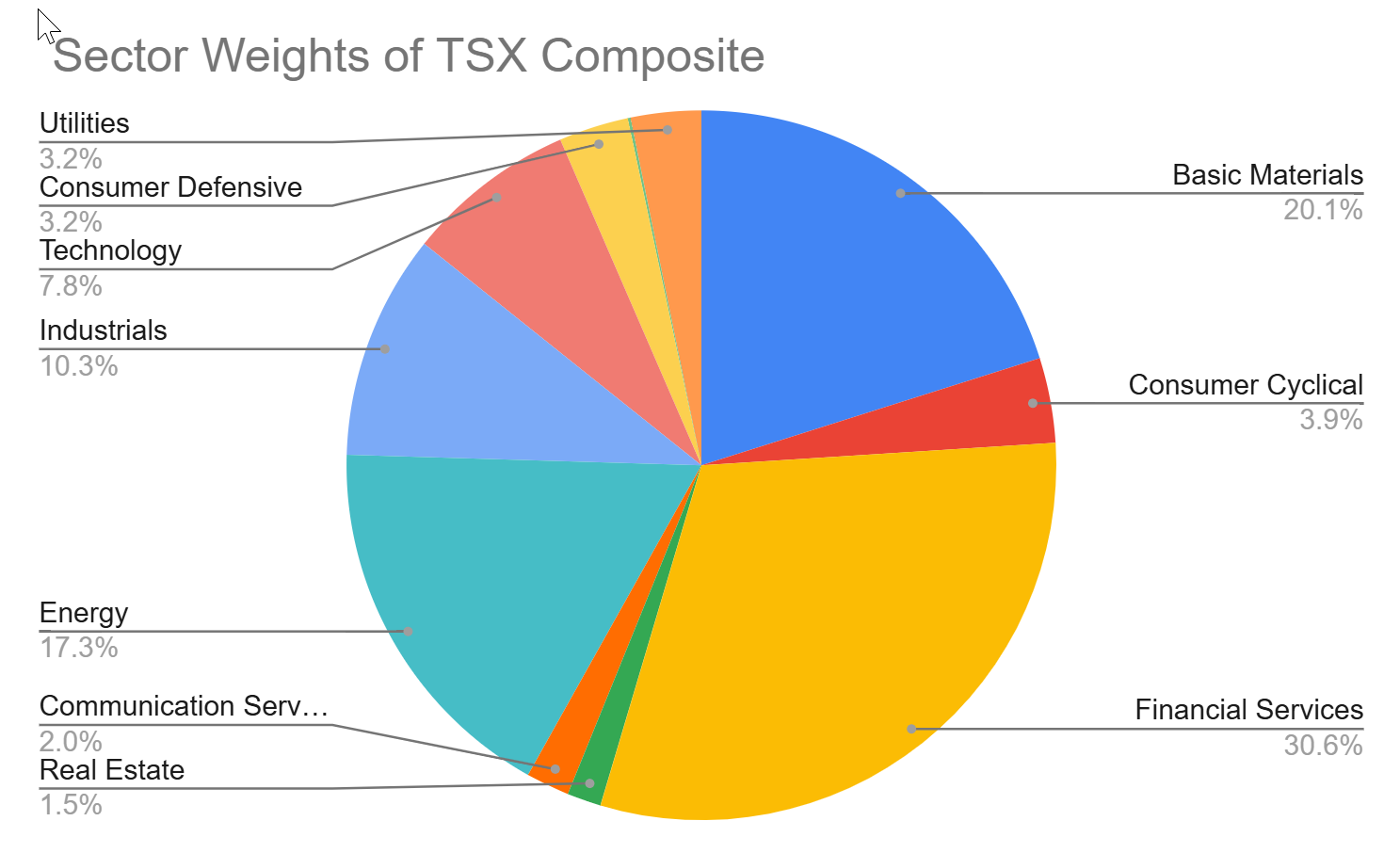
source: YCharts.com as 03/12/26
In our opinion the TSX and Canadian investors will greatly benefit from the exposure to the commodities, the infrastructure, and the supply chains that the new Cold War demands.
The board has reset. It’s time to think carefully about where the pieces land.
Glen