
The Invention That Changed Capitalism
More than a century before steam remade the world, modern capitalism invented one of its most powerful technologies. It was not a machine, but it helped fund the machine age and much of what followed. It was a legal invention that transformed a business into a person. It was the corporation.

source: ChatGPT
The Dutch East India Company flipped the script. What had once been the exclusive domain of kings, churches, aristocrats, and great merchant families became accessible to the public. Ordinary investors could own shares in a legal entity that could own property, borrow money, sign contracts, take risks, and survive its founders.
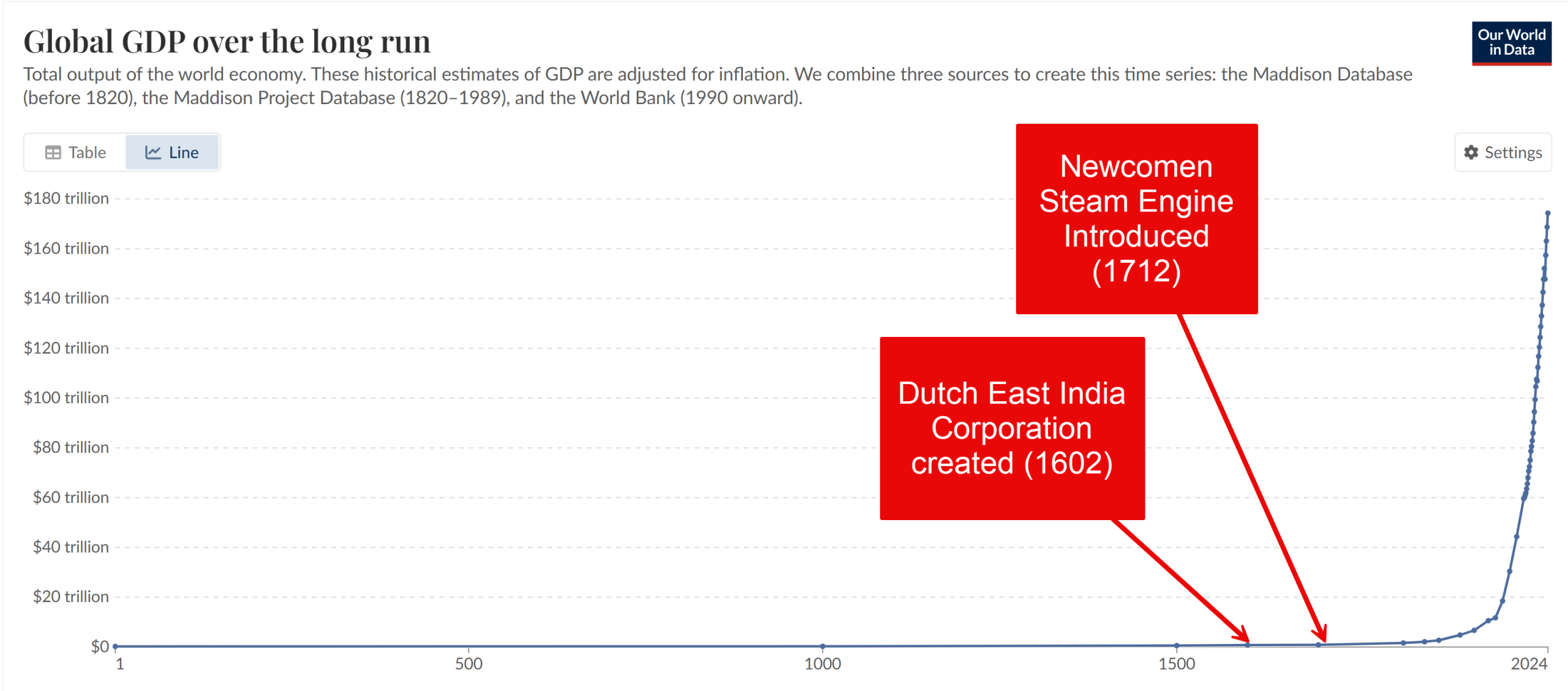
source: Our World in Data and Glen Evans
The corporation democratized risk. By democratizing risk, it democratized the upside of progress. Compounding did the rest.
Now, artificial intelligence may require the next legal leap.
Given the public’s deep distrust of Big Tech in general, and AI in particular, that leap may feel like a leap too far. Let’s face it: AI raises hard questions about jobs, privacy, truth, security, accountability, and power. Many people worry that this technology will enrich a handful of giant companies while ordinary families are left to manage the disruption.
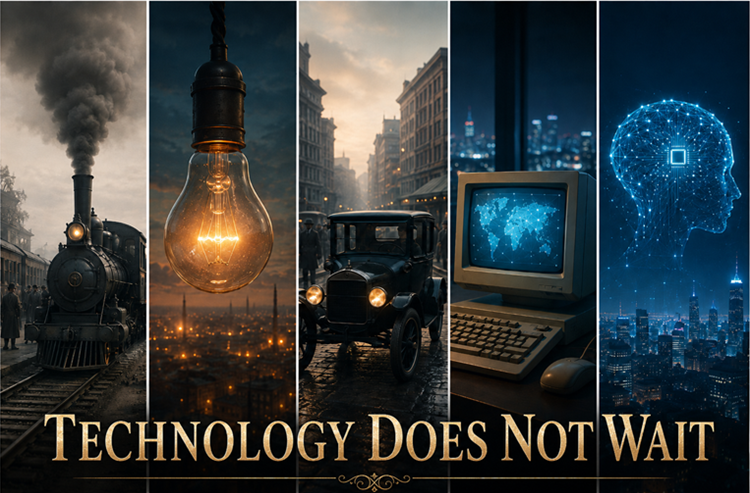
Briana and I get it. That fear is understandable. But we are investors, not spectators. We do not have the luxury of waiting until the future feels comfortable. History shows that general-purpose technologies do not stop because the public is uneasy. Railways did not wait. Electricity did not wait. The automobile did not wait. The internet did not wait.
AI will not wait either.
Source: ChatGPT
Why AI May Need a New Legal Framework
Here is the leap: AI agents are not currently recognized by law as independent economic actors. They cannot open a bank account, sign a contract, or bear liability on their own. Argentina’s President Javier Milei has proposed the creation of “non-human corporations”, legal entities operated by AI agents or robots.
An AI agent is not just a chatbot. It is software that can be given a goal and then act on it: reading data, using tools, making decisions, writing code, booking meetings, moving money, or coordinating with other agents.
Imagine a future where AI agents outnumber human workers 10 to 1, 100 to 1, or more. These agents write code, answer customers, search databases, manage supply chains, test drugs, negotiate contracts, and coordinate with other agents. Now ask a simple question: which country gets to tax that activity?
Argentina’s President Javier Milei has his hand up. What about Canada?
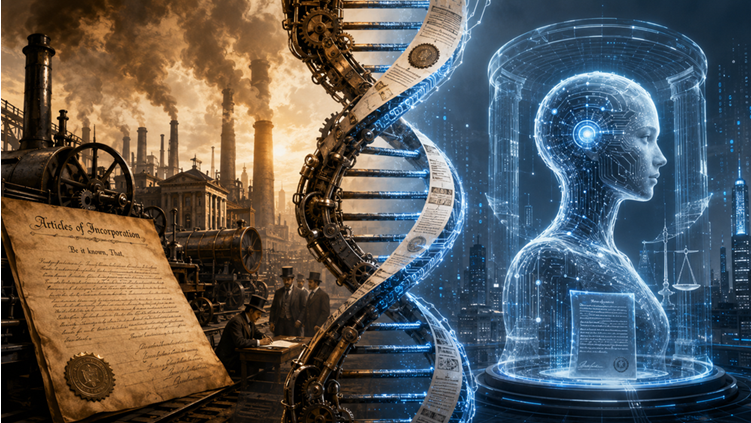
If the corporation gave pooled capital a legal body, Milei is asking whether autonomous intelligence needs one of its own. In a recent Financial Times essay, Milei made the historical case directly. The Industrial Revolution, he argued, was not powered by machines alone. It also required the corporation. In his phrase, the machine and the legal entity became “the double helix of modern prosperity.” I love that framing.
Source: ChatGPT
The Global Race to Build the AI Economy
That is the point Canada risks missing. The next revolution will not be won by invention alone. It will be won by the countries that build the legal, physical, electrical, and financial infrastructure that lets invention scale.
Milei may yet overreach, but his early record stands as a direct challenge to Prime Minister Mark Carney’s state-directed economic model, including his new “AI for All” strategy: one country is trying to clear a legal runway for the future; the other is trying to coordinate the future through funds, frameworks, safeguards, training modules, and ministerial choreography.
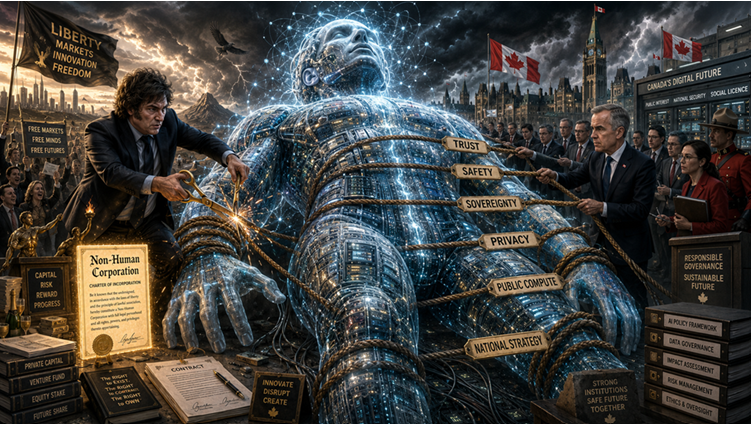
Think of AI as Gulliver. Milei wants to cut the ropes, hand him incorporation papers, and invite him to build a new Amsterdam in Buenos Aires. Carney sees the same giant and reaches for more ropes. Those ropes are labelled trust, safety, sovereignty, privacy, public compute, and national strategy. Many Canadians will be relieved that Carney is reaching for the ropes. History will judge.
source: ChatGPT
Canada’s AI Opportunity
Here is the sobering truth: Canada is lagging badly in AI adoption despite helping create modern AI. We have world-class researchers, universities, clean electricity, cold weather, land, energy, rule of law, and proximity to the United States. Yet only about 12 percent of Canadian businesses use AI to produce goods or services. The federal goal is to raise that to 60 percent by 2034. (source)
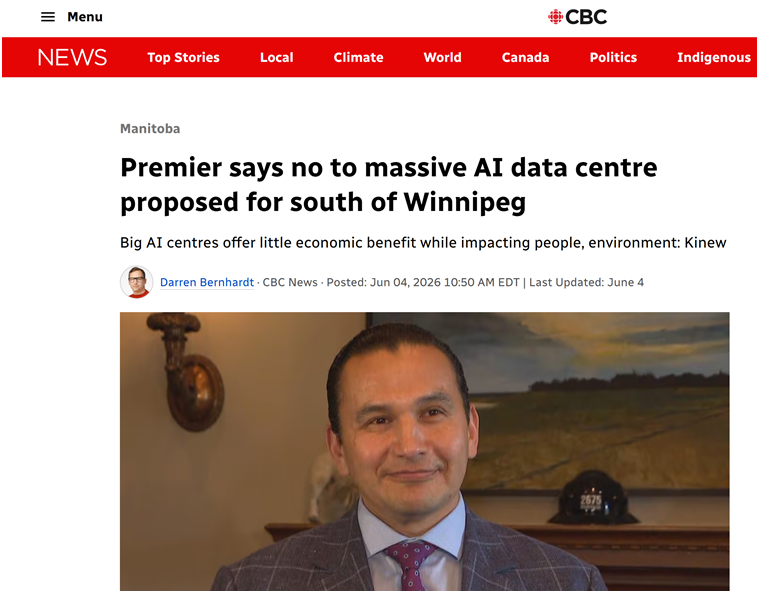
This is where Manitoba becomes the perfect foil to Argentina. Milei is asking how to make Argentina the legal home of AI agents. Manitoba Premier Wab Kinew, by contrast, has reportedly dismissed AI data centres as an environmental threat with “not much” economic benefit.
That sentence may age very badly.
The Data Centre Debate
A modern AI data centre is not impact-free. It needs electricity, land, construction materials, backup systems, transmission, and careful siting. But compared with mining, refining, steel, chemicals, pulp and paper, or large logistics hubs, it is one of the cleanest major industries a province could attract. A hydro-powered AI data centre has no smokestack, no tailings pond, no open pit, no refinery flare, little traffic, limited noise when properly sited, and increasingly low water use with modern cooling systems. It brings capital investment, construction jobs, grid upgrades, fibre infrastructure, tax base, technical jobs, and the chance to anchor future AI companies.
If that does not qualify as clean industry, what does?
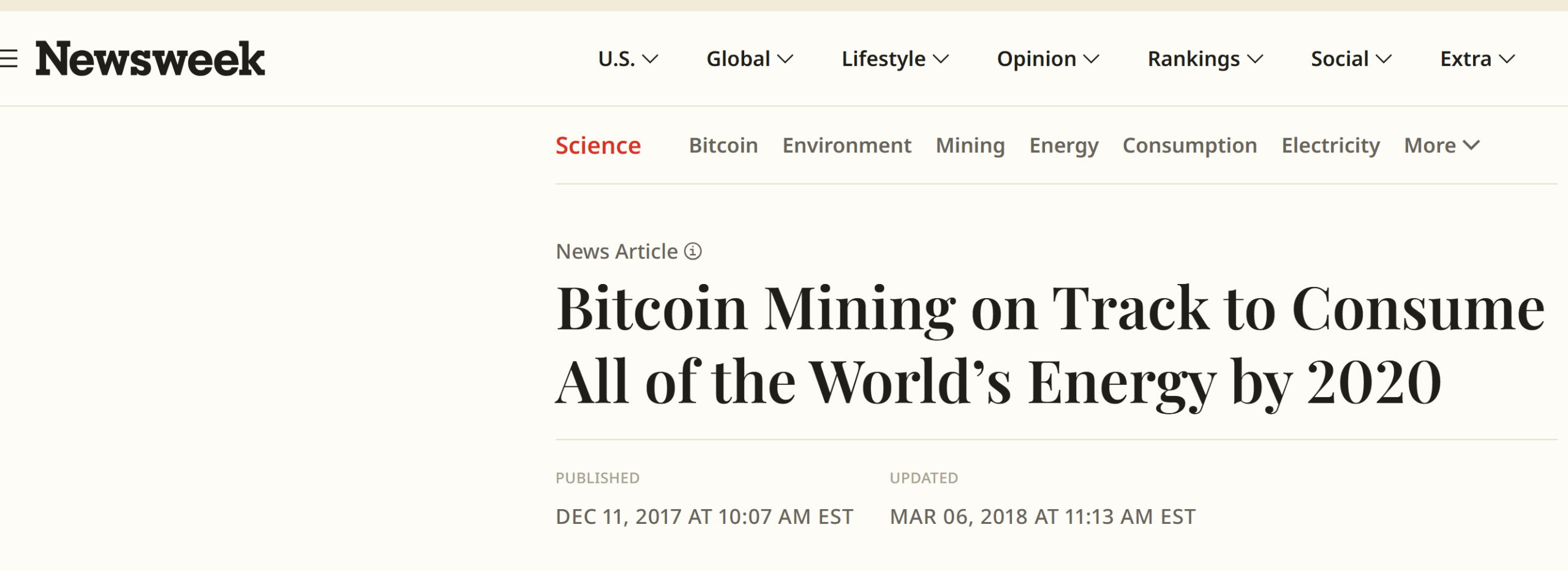
The water panic around AI data centres is especially revealing. We have seen this movie before. A few years ago, Bitcoin was going to boil the oceans and consume the world’s electricity. Remember that? It did not happen. Bitcoin mining became a real energy user, but the apocalyptic forecasts were wrong.
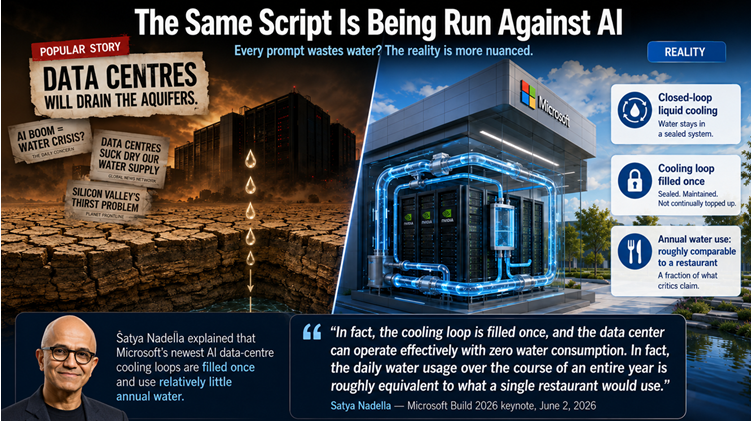
Now the same script is being run against AI. The popular story says data centres will drain the aquifers. Every prompt wastes water. Soon we are back to boiling the ocean and missing the point.
Microsoft’s newest AI data-centre designs use closed-loop liquid cooling. Satya Nadella recently explained that the cooling loop is filled once and that annual water use can be roughly comparable to a restaurant. Water still matters, but the broad panic narrative is already being overtaken by engineering progress.
source: ChatGPT
What This Means for Investors
Canada needs an AI intervention.
We face a productivity crisis. We have an aging population, weak business investment, poor productivity growth, and a standard-of-living problem that immigration alone cannot solve. AI is the labour-force multiplier for a society running short of workers, capital intensity, and fiscal room.
Anthropic’s recent work on recursive self-improvement makes the timing more urgent. AI is already helping build AI. We are not yet at fully autonomous self-improving AI, but we are close enough that serious countries should be preparing their legal, physical, electrical, and financial infrastructure now.
The AI winners will not simply be the countries that invent the technology. They will be the countries that build the institutions, infrastructure, energy systems, capital markets, and legal frameworks necessary for it to scale.
Milei may be early. He may be reckless. His idea of “non-human corporations” may prove too radical, too soon. But he understands something important: every great economic age eventually requires a legal form equal to the technology.
The corporation gave capital a body. The question now is whether autonomous intelligence will need one too.
That brings us back to Gulliver. In Jonathan Swift’s story, the tiny Lilliputians believe they have mastered the giant because they have tied him down with enough ropes. They are organized, serious, procedural, and very proud of themselves. Until Gulliver wakes up.
Canada helped create modern AI. We have nearly all the ingredients of an AI superpower. What we seem to lack is urgency. The point is not that every rope should be cut. Trust matters. Safety matters. Sovereignty matters. Privacy matters. But when the ropes become the strategy, they do not hobble AI. They hobble us.
Bitcoin did not boil the ocean. AI will not drain the aquifers. But countries that refuse to build intelligence infrastructure are opting out of future growth—in exchange for what?
The giant is waking up.
Canada can help shape him, house him, power him, tax him, and profit from him. Or we can spend the decisive years congratulating ourselves on how responsibly we tied the knots.
Briana and I are looking for less knot-tying and more building.
Glen