
Diamonds are Forever… Until They’re Not
In 1947, De Beers coined the phrase: “Diamonds are forever”. Then in one of the most audacious campaigns ever conceived they set a “love standard”—two months of income for an engagement ring. That genius advertising and a cut throat monopoly on diamond mining created what appeared to be an unassailable market dominance for 80 years—considerably less than forever! China’s development of lab-grown diamonds in 2018 sealed the industry’s fate.
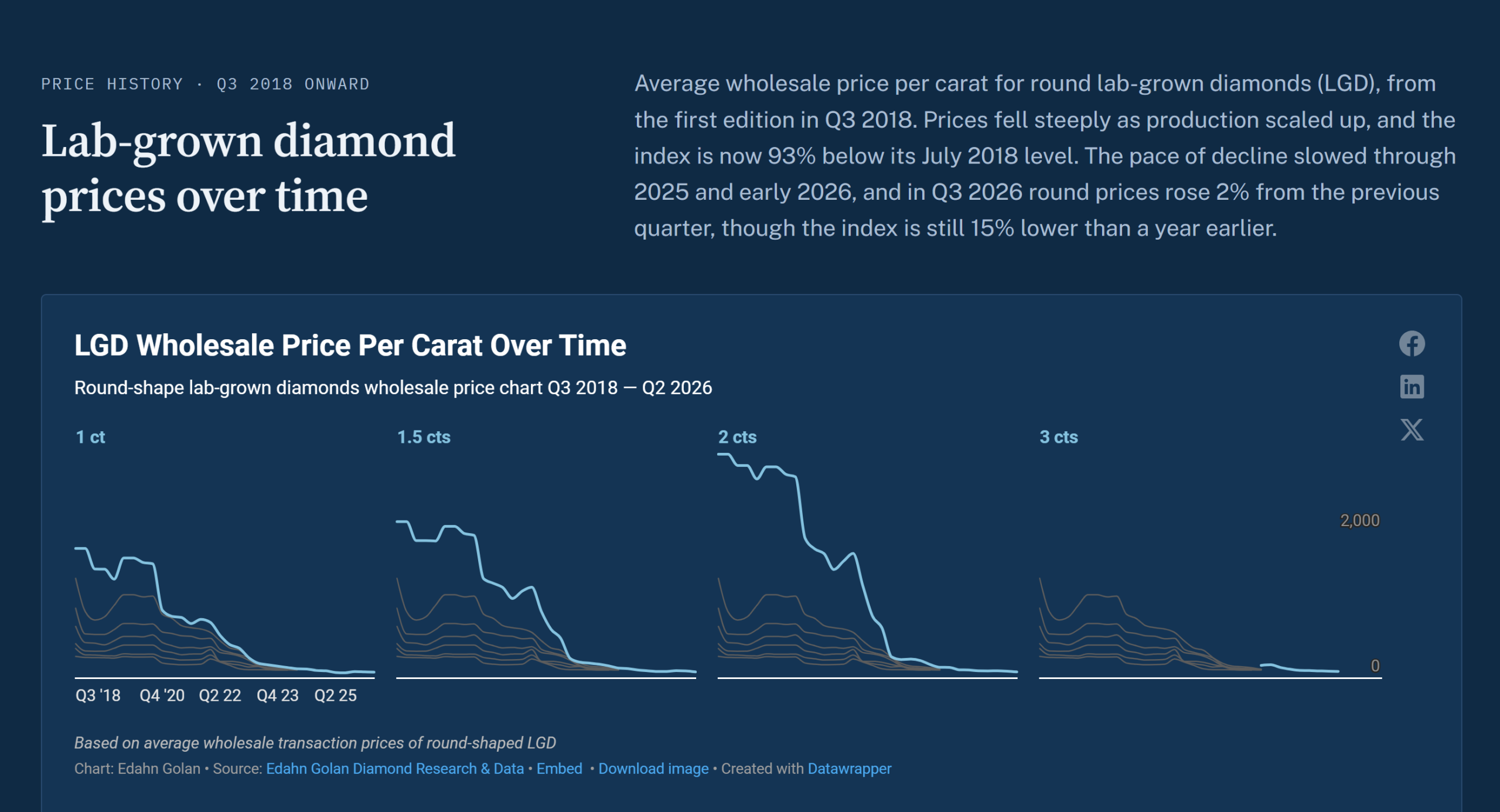
Lab grown diamond prices have since collapsed over 90% to about $100/carat for quality stones. A pair of gold 1/2 carat diamond earrings can be bought at Walmart.ca for about $110. Almost two thirds of engagement rings bought in the U.S. in 2025 now have lab grown centre-stones. The investment story here should be familiar for investors—technology has overcome physical scarcity and destroyed the previous moat. Technology hasn’t just disrupted the diamond miners, mathematicians are feeling the same pain.
AI and the End of Intellectual Scarcity
Last week OpenAI shocked the math world by releasing over 700 manuscripts advancing previously unsolved math problems. Far from celebrating this progress, the academy is pearl clutching. The Association for Human Mathematics issued a statement claiming the progress was “not a demonstration of scholarship, but a demonstration of power.” A Fields Medalist literally was reduced to tears claiming “they have annihilated my field of research.”—source. Histrionics aside, I thought that solving the problem was the point. Like diamonds, mathematics aren’t “forever” either.
Peter Thiel has long argued that universities have contributed to stagnation in math and science by rewarding plodding publication and tenure over actual breakthroughs. AI is now doing what the academy largely failed to do: scaling the generation of new mathematical results beyond the capacity of any individual or department. The old scarcity of advanced insight has been broken by technology, just as the scarcity of gem-quality diamonds was broken by reactors. Closer to home, Canadian telecommunications giants (home to many many math majors) have been struggling for years—and now a technological disruption appears as a new threat.
The Next Industry Facing Disruption
Elon Musk ranks low in Canadian popularity, but probably not lower than the service at Bell, Telus or Rogers. Last week, in the U.S., SpaceX agreed to acquire a nationwide portfolio of low-band 800 MHz spectrum (up to 14 MHz paired) that can complement its satellite constellation and improve indoor and terrestrial coverage. The deal, still subject to regulatory approval and reported near $8 billion, contributed to a broad sell-off in telco stocks on Friday. All three major Canadian carriers closed at multi-year lows.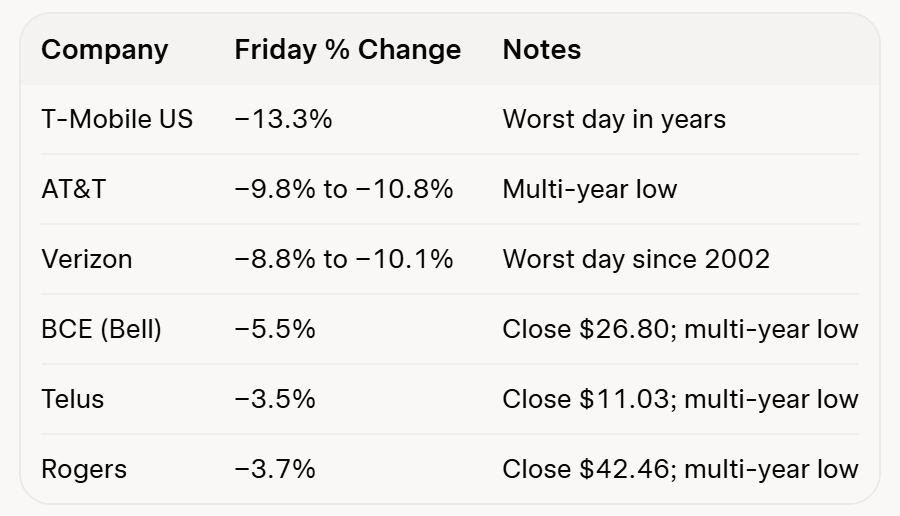
source: StockCharts.com and ChatGPT
To be clear, the problems with Canada’s telecommunications industry are of their own making and have been ongoing. We shared this infographic on the space last week:
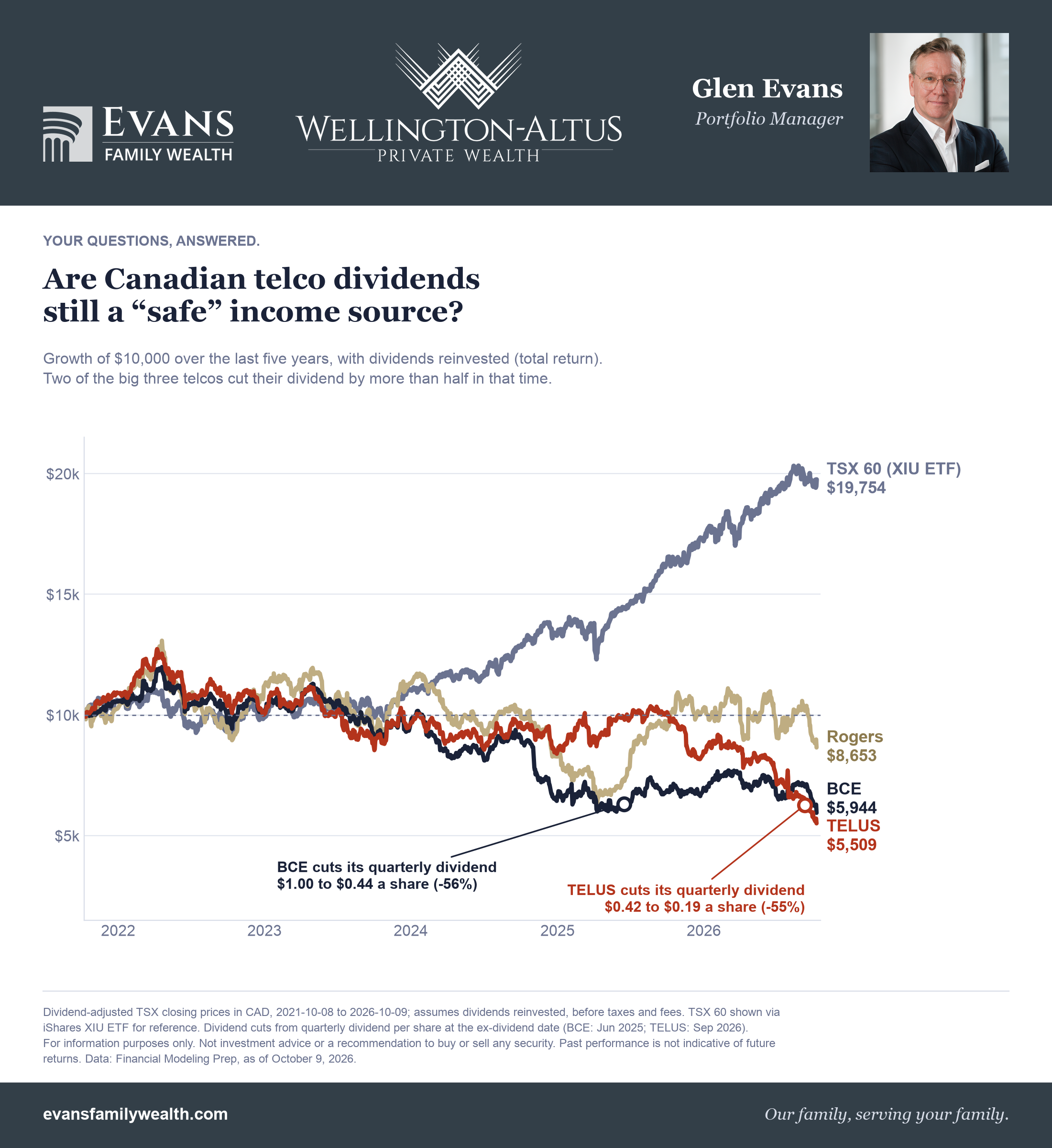
Canada’s majors already face heavy debt, pricing pressure, and both BCE and Telus have slashed their dividends. Spectrum and regulatory franchises that once looked permanent are now contestable by an operator that can mix orbital reach with terrestrial spectrum. The sound of inevitability is echoing in the telco space. Will it also be heard in the banking industry? Based on his investments, one could argue that Prime Minister Mark Carney thinks so.
Could Banking Be Next
Carney famously disclosed no personal investments in any of the Canadian Big Six Banks—source. More telling, he was a board member and remains a shareholder of one of the largest disruptors to the banks—Stripe. Given the high regard Canadians have for his financial acumen, maybe we should be paying attention?
It must be said that the Canadian banks have been legendary performers over time and even in the last year. So it’s a bit jarring that Senior Deputy Governor Carolyn Rogers had this to say:
“It would also be hard to argue, on any objective measure, that Canada’s banking system is anything other than an oligopoly.”
“Greater contestability, more new entrants and more innovation in our financial sector would lead to competition that’s good for consumers, for productivity and for our economy. We should lean into it.”
Speech, Canadian Club Toronto, October 9, 2025
New entrants or increased access would certainly please the Americans who have been complaining vociferously about it. A Globe and Mail article in 2021 explains why Mark Carney is betting on the disrupters, not the incumbent banks. Here was the opening:
“Commercial banks could face a period of disruption and heightened competition as digital currencies upend payment systems and undermine existing models for bank funding, Mark Carney told a group of leading central bankers on Monday.”
“Banks are a means to an end, not ends in themselves, and they will have to adapt to a much more competitive environment,” he said.
The Investment Takeaway
Given the strong performance in the Canadian Bank stocks, one might conclude that Carney is wrong or that he is early. Still, when the Bank of Canada, the government of the day, and our largest trading partner all want more competition, it seems imprudent to dismiss the risk outright.
At Evans Family Wealth, we’re tracking all these developments closely, while holding onto the banks. The lesson today is the one that De Beers learned too late—nothing is forever.
Glen